
How to layer body mist and perfume comes down to one thing most people skip: building scent in thin, compatible layers so it wears longer and smells intentional, not crowded.
If you’ve ever sprayed a body mist, added perfume, then wondered why it vanished in an hour or turned oddly sharp, you’re not alone. Mists and perfumes behave differently on skin, and the order and placement matters more than the brand.
This guide keeps it practical, a little opinionated, and very doable at home: what layering really means, how to pick pairings that don’t fight each other, and a few quick “recipes” for common vibes like clean, cozy, or beachy.
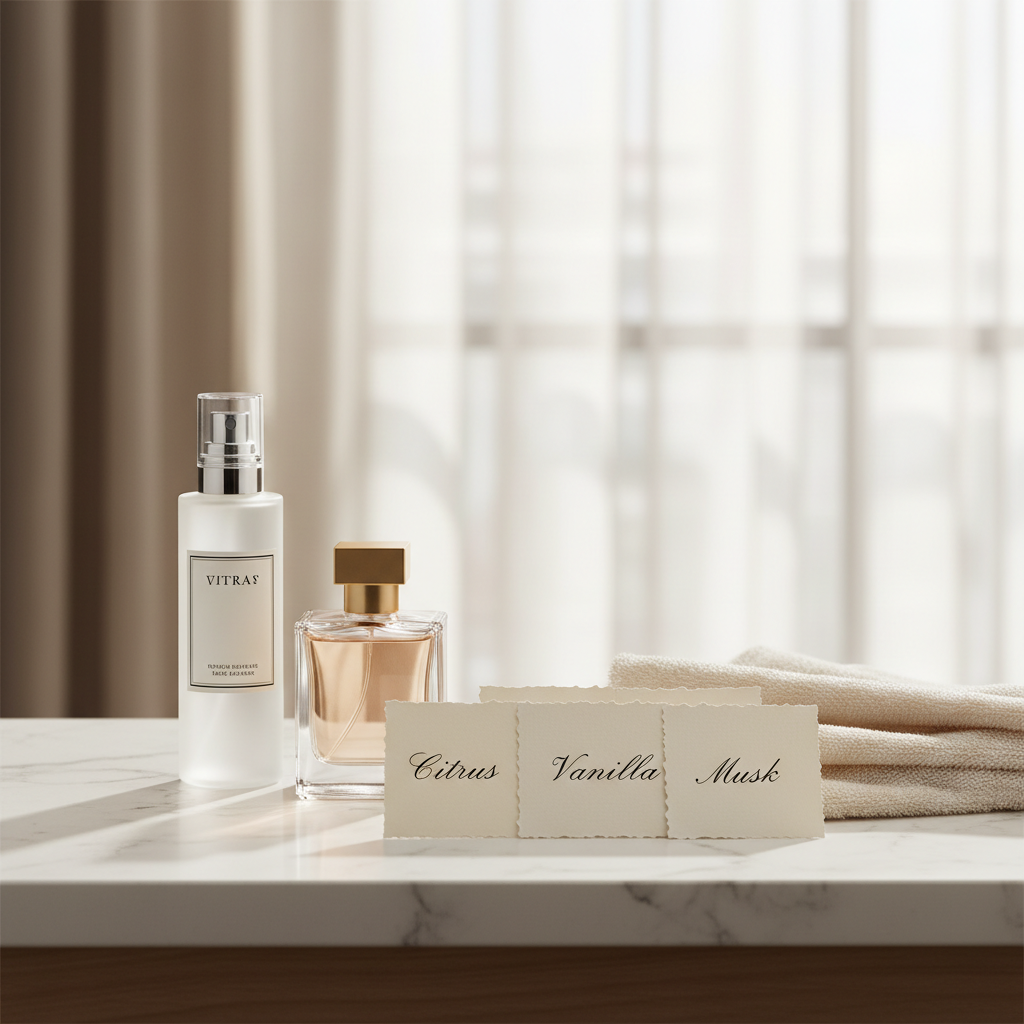
What layering actually does (and what it doesn’t)
Layering isn’t about making your fragrance “stronger” by piling on sprays. It’s about making the scent progression smoother as it dries down, and giving your perfume more to hold onto.
Body mist usually has a lighter concentration and more water or alcohol, so it flashes off faster. Perfume sits denser and evolves over hours. When they’re compatible, mist sets a mood, perfume supplies the structure.
- Good layering: feels seamless, like one fragrance with a long opening.
- Bad layering: smells “split,” where one note screams over another, or turns sour after 20–30 minutes.
Also worth saying: if you want maximum longevity, layering helps, but it won’t turn a light citrus mist into an all-day fragrance on every skin type. Heat, skin dryness, and fabric all change results.
Pick pairs that won’t clash: a quick compatibility rule
Before you spray anything, decide which product is the “lead.” Most people do better when the perfume is the lead and the body mist supports it, not the other way around.
The simple rule
Match one shared note family, then keep the rest either neutral or adjacent. That means: vanilla with vanilla, citrus with citrus, clean musk with clean musk, rose with soft florals.
- Easy wins: vanilla, amber, musk, coconut, light woods, soft florals.
- Trickier: heavy patchouli, sharp green notes, strong leather, smoky incense, very “blue” aquatic colognes.
According to The International Fragrance Association (IFRA)... fragrance products should be used as directed and within recommended limits, so when you layer, keep your total spraying reasonable, especially on sensitive skin.
A fast self-check: which layering style fits your goal?
People ask how to layer body mist and perfume, but what they really mean is “what outcome do I want.” Pick your lane first, then layer accordingly.
- Make perfume last longer: use mist lightly, focus on moisturized skin, then perfume on pulse points.
- Smell “fresh out of the shower”: clean mist over larger areas, then a clean musk perfume close to the body.
- Create a signature scent: same note family, but different textures (example: airy vanilla mist + woody vanilla perfume).
- Keep it office-friendly: fewer sprays, lower projection, prioritize skin over clothes.
If you’re unsure, start with the smallest possible experiment: 1–2 mist sprays, 1 perfume spray, and wait 15 minutes before deciding.
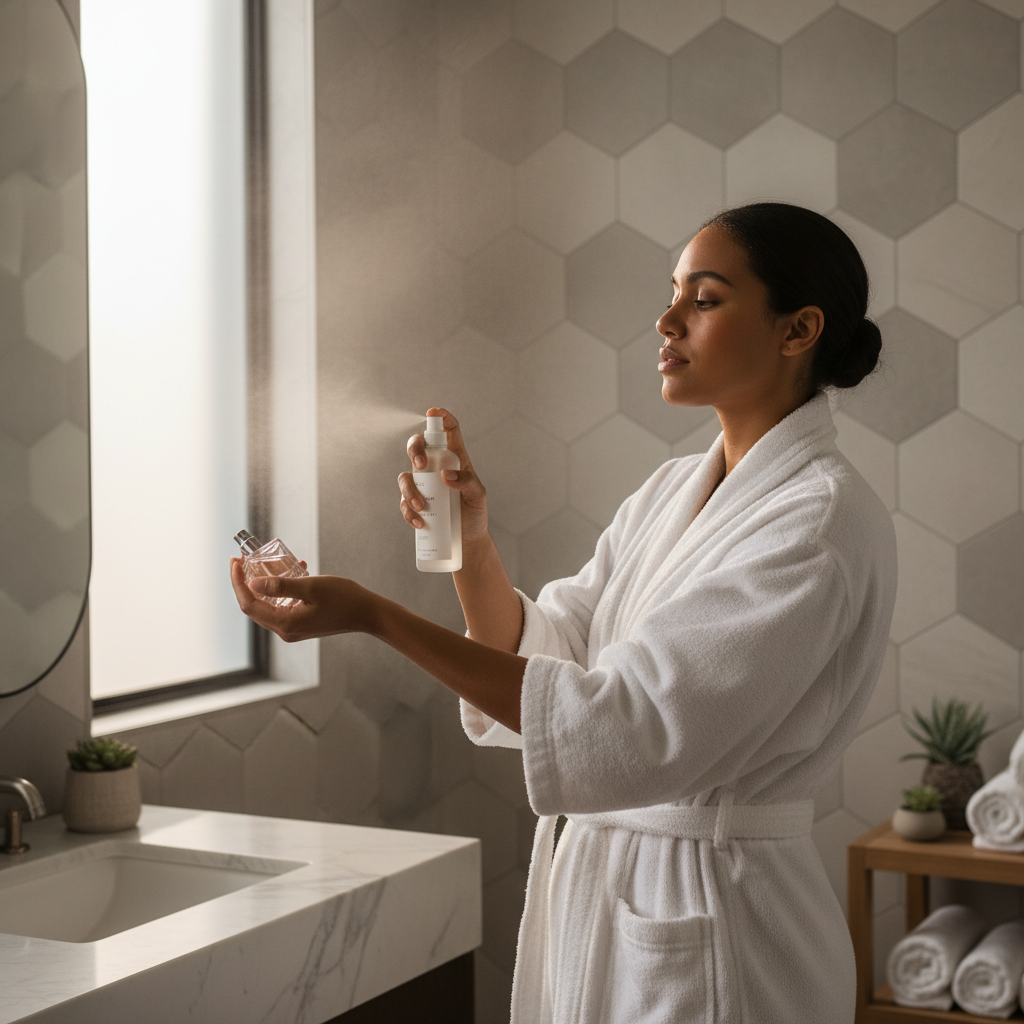
Step-by-step: how to layer body mist and perfume (the reliable method)
How to layer body mist and perfume works best when you treat it like skincare: prep, light layer, then the more concentrated product.
1) Prep your base (this matters more than people want it to)
Dry skin “drinks” fragrance and can make it disappear fast. A plain, unscented lotion helps more than extra sprays.
- Apply unscented moisturizer to areas you’ll scent.
- If you use a scented body lotion, keep it in the same family as your perfume.
2) Apply body mist strategically
Use mist on larger zones where you want a soft aura, not on every pulse point.
- Good areas: shoulders, chest (over clothing if sensitive), hair ends or hair brush.
- Skip: areas you’ll hit with perfume, if you’re testing compatibility.
3) Add perfume with restraint
Place perfume on pulse points, then don’t rub. Rubbing can break top notes and make the opening feel harsher.
- Start with 1 spray: wrist or neck.
- Want more? Add a second spray after 10 minutes, not immediately.
4) Give it time before you judge
Most clashes show up in the dry-down, not the first 30 seconds. Wait at least 10–15 minutes, then decide if you need to adjust.
Layering “recipes” that usually work in real life
If you’re stuck pairing scents, here are combinations that tend to behave well. They’re not the only options, but they’re hard to mess up.
| Vibe | Body Mist Direction | Perfume Direction | Why it works |
|---|---|---|---|
| Clean & musky | Fresh linen, light musk, aloe | Skin musk, soft amber | Similar “clean” base, low conflict |
| Cozy gourmand | Vanilla, cocoa, caramel | Vanilla woods, amber vanilla | Shared sweetness, perfume adds depth |
| Beachy | Coconut water, airy sunscreen vibe | Solar floral, coconut-amber | Mist sets the scene, perfume anchors |
| Bright daytime | Soft citrus, neroli, green tea | Citrus musk, light woody citrus | Keeps sparkle without turning sharp |
| Date night | Berry-vanilla or rose mist | Rose-amber or vanilla-spice | Mist adds sweetness, perfume adds pull |
One honest tip: if both products are already complex, layering becomes harder. Pair a “simple” mist with a more detailed perfume, or vice versa.
Common mistakes that make layered fragrance smell worse
Most layering fails come from a few repeat behaviors. Fix these and you’ll notice improvement fast.
- Overspraying to chase longevity: you get noise, not staying power. Prep and placement usually beat volume.
- Mixing opposite families: clean aquatic + heavy gourmand often turns strange on dry-down.
- Spraying perfume into a wet mist cloud: it can distort the top notes and read “alcoholic.” Let mist settle first.
- Ignoring fabric: perfume on sweaters lasts, but can trap wrong notes, especially smoke or strong spice.
- Rubbing wrists: it’s tempting, and it often flattens the opening.
And if you’re layering for work, don’t rely on your nose at home. A scent that feels “light” to you can project more in warm offices or cars.

When to be cautious (skin, allergies, and scent sensitivity)
Layering means more total product on skin, so if you get irritation, headaches, or asthma triggers, scale back. Fragrance sensitivity varies a lot, and it’s not something to push through.
- Patch test new products on a small area, especially if you plan to layer daily.
- Consider spraying perfume on clothing instead of skin, but start lightly.
- If you have persistent reactions, it’s sensible to talk with a dermatologist or another qualified clinician.
According to the American Academy of Dermatology Association... fragrance can be a trigger for contact dermatitis in some people, so choosing fragrance-free moisturizer and limiting exposure may help if you’re prone to irritation.
Key takeaways and a simple plan for tomorrow
You don’t need a complicated routine to make layering work. Keep the pairing compatible, keep the sprays controlled, and give the dry-down time before you decide it “doesn’t work.”
- Start simple: one mist, one perfume, one shared note family.
- Improve longevity: moisturize first, then mist lightly, then perfume on pulse points.
- Adjust slowly: add one spray at a time, not all at once.
If you try one thing after reading this, make it the 15-minute check: layer lightly, wait, then decide. It’s the fastest way to build a combination that smells like you meant it.
FAQ
- Should I apply body mist before or after perfume?
Most of the time, mist first and perfume second works better because perfume acts like the “top layer.” If your mist is very strong and your perfume is delicate, you can flip it, but test on a small area. - Can I layer body mist and perfume with different scents?
Yes, but pick one shared note family so they don’t compete. If both are complex and loud, you may end up with a muddled dry-down, so start with fewer sprays. - How many sprays should I use when layering?
A practical starting point is 1–2 sprays of body mist and 1 spray of perfume, then reassess after 10–15 minutes. Many situations don’t need more, especially indoors. - Why does my layered fragrance smell good at first, then weird later?
That’s usually a dry-down conflict: base notes like musk, amber, patchouli, or strong woods combine differently as top notes fade. Try pairing within the same family, or remove one product entirely and re-test. - Does lotion help layering last longer?
Often, yes. Unscented moisturizer can reduce “evaporation” on dry skin, helping scent last. If you use scented lotion, keep it close to your perfume’s main notes. - Can I spray body mist on hair and perfume on skin?
Many people do. Hair can hold scent, but product formulas vary and some may be drying, so keep it light and consider spraying on a brush instead of directly on hair. - Is it okay to layer if I get headaches from fragrance?
Proceed carefully. Using less product, choosing softer scents, and avoiding confined spaces can help, but if symptoms persist it’s wise to consult a healthcare professional.
If you’re trying to build a small, low-stress routine, it often helps to pick one “everyday” perfume, then rotate a couple of body mists that stay in the same note family, you’ll get variety without constantly gambling on clashes.