
Casual outfits for women work best when they feel effortless but still look intentional, like you chose the look on purpose instead of grabbing whatever was clean. If your everyday style keeps landing in “meh,” it’s usually not a creativity problem, it’s a system problem.
This guide gives you repeatable outfit formulas, a small wardrobe plan that mixes easily, and quick tweaks that make even basics look put-together. You’ll also get a simple self-check so you can stop copying outfits that look great online but feel wrong on you.
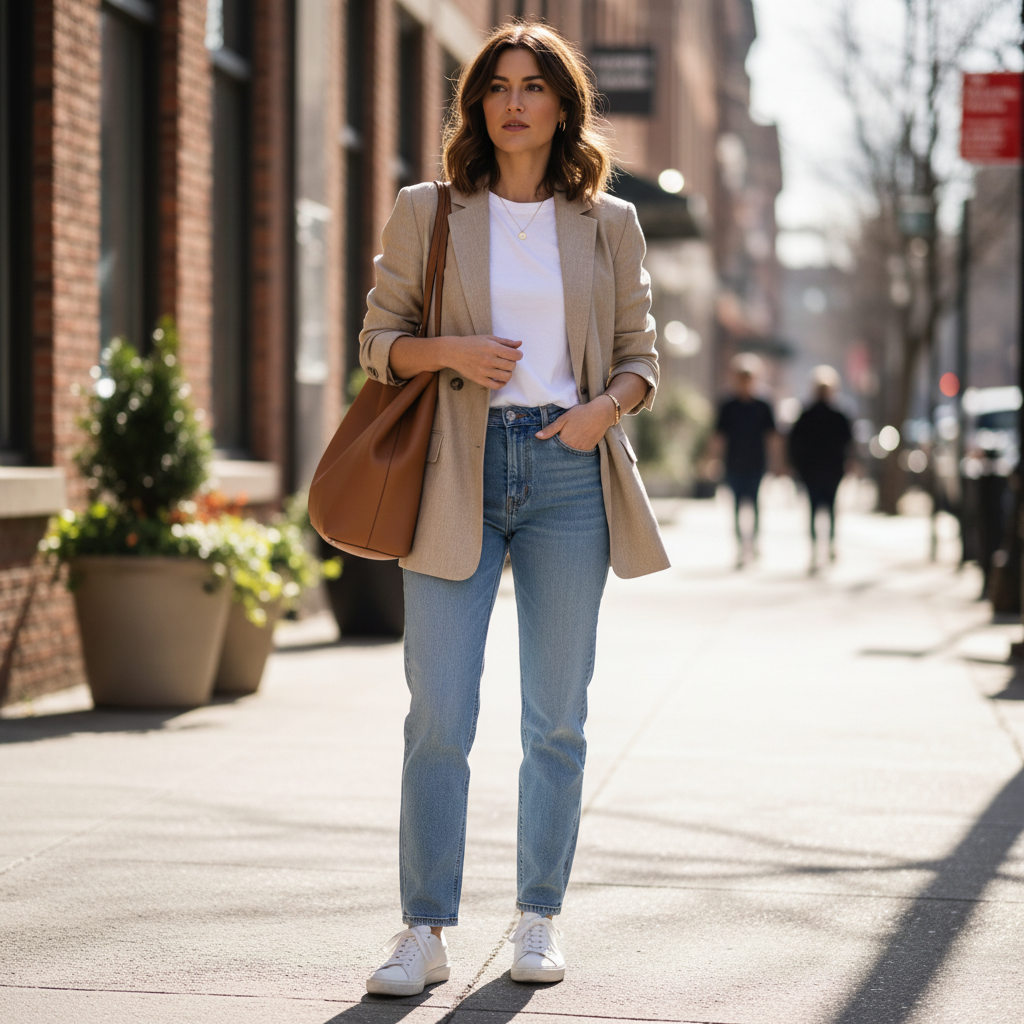
One more thing before we jump in, “casual” doesn’t mean “no rules.” It just means comfort leads, and structure comes from fit, color, and one or two sharper pieces that hold the whole look together.
What “easy casual” really means (and why outfits feel hard)
Most outfit frustration comes from a few predictable issues, not a lack of style. Once you spot which one you’re dealing with, the fix gets much simpler.
- Too many random pieces: items you like individually, but they don’t share a color story or silhouette.
- Fit drift: you kept buying different cuts, now nothing balances, like wide pants plus oversized top plus bulky shoes.
- No “third piece”: tee + jeans is fine, but without a layer or accessory, it can read unfinished.
- Shoe mismatch: the wrong shoe can make the whole outfit feel off, even when the clothes are solid.
- Fabric gives it away: thin tees, clingy knits, or overly wrinkled items can look tired fast.
According to Vogue and other fashion editors, a consistent personal style often comes from repeating a few silhouettes and refining them over time rather than chasing constant novelty. That’s good news, you can build “everyday style” with repetition.
A quick self-check: which casual outfits actually suit your life?
Before copying a look, run it through a real-life filter. It saves money and stops the “cute on her, weird on me” cycle.
Use this 60-second checklist
- Your day: driving, walking, office, school pickup, errands, travel, WFH, all-day standing.
- Your climate: humidity, big temp swings, strong AC indoors, rain.
- Your comfort line: waistbands, sleeve tightness, shoe support, fabrics that itch.
- Your polish level: do you need “athleisure casual” or “smart casual” most days?
- Your repeat rate: can you wear it weekly without feeling bored?
If two or more boxes feel shaky, keep the idea but change the execution, like swapping a bodycon top for a relaxed knit, or sandals for sleek sneakers.
7 outfit formulas you can repeat all week
Outfit formulas are the shortcut. You keep the structure and rotate colors, shoes, and layers. Many casual outfits for women that look “expensive” are just a simple formula with clean styling.
Everyday formulas (mix and match)
- Straight jeans + fitted tee + lightweight layer (blazer, denim jacket, cardigan)
- Wide-leg pants + tank + cropped jacket (keeps proportions clean)
- Midi dress + sneakers + tote (easy, but still reads styled)
- Leggings + longline top + structured outerwear (puffer vest, trench, shacket)
- Skirt + simple knit + flats (swap in boots when cooler)
- Matching set + “real” shoe (loafer or minimal sneaker instead of beat-up slides)
- Shorts + button-down (worn open over a tank, or half-tucked)
Key point: pick two silhouettes that feel like “you,” then repeat them. Variety can come from color, texture, and one accessory, you don’t need twenty different shapes.
A small capsule that makes casual outfits easier
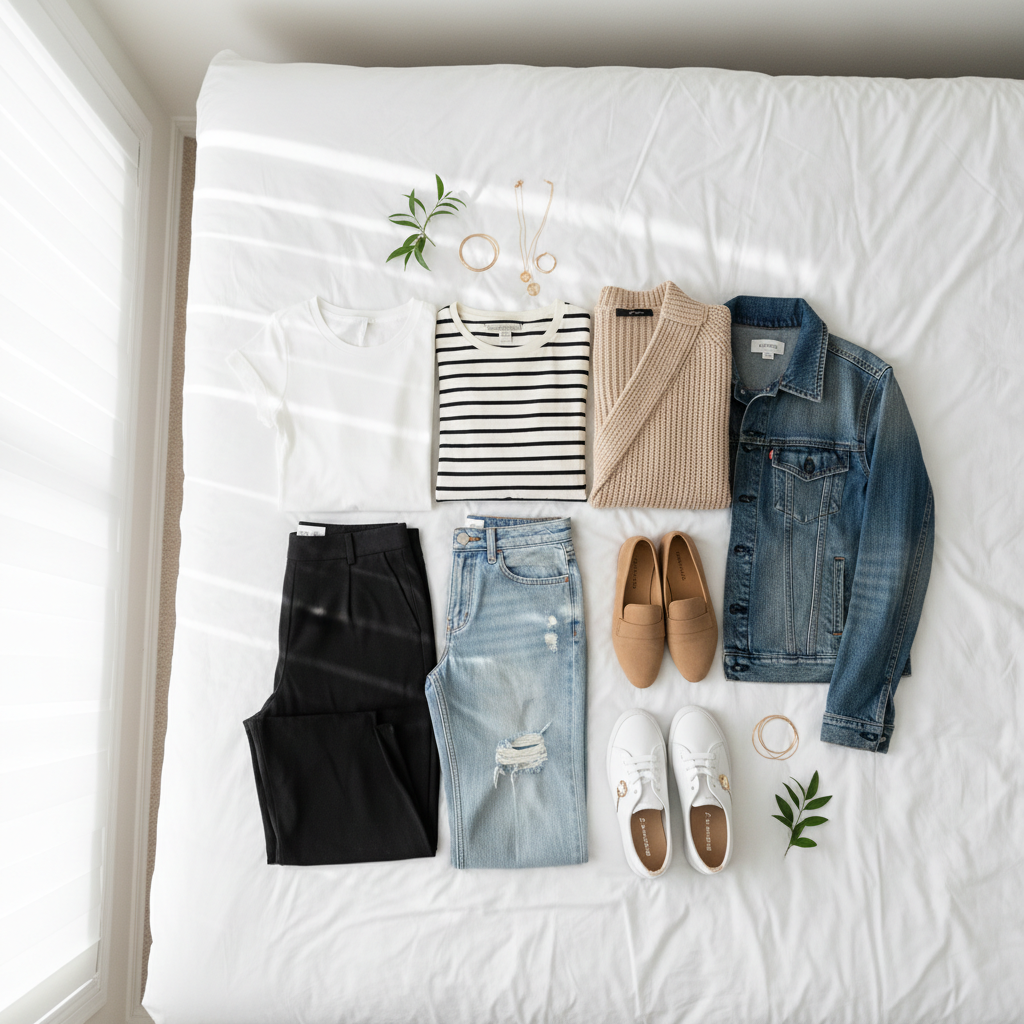
You don’t need a strict capsule wardrobe, but having a “core 12–16” makes getting dressed faster. The point is compatibility: most tops match most bottoms, and shoes work across outfits.
Starter casual capsule (adjust for your style)
- Tops: 2 tees (one white or ivory), 1 striped or graphic tee, 1 tank, 1 knit top
- Bottoms: straight jeans, relaxed trousers, leggings or ponte pants, denim skirt or midi skirt
- Layers: denim jacket, cardigan, blazer or utility jacket
- Shoes: clean sneakers, flat sandal or ballet flat, loafer or ankle boot
- Extras: belt, simple jewelry, everyday bag with structure
If your closet already has a lot, don’t replace everything. Just choose your “default” versions and let the rest earn their spot.
Fabric, fit, and color: the three levers that change everything
When people say an outfit looks “polished,” they often mean these three things are working together. This is where casual style stops feeling sloppy.
Fabric (the quiet upgrade)
- Look for tees with a bit more weight, they drape better and show less texture underneath.
- Choose knits that hold shape, overly thin knits can cling and lose structure.
- If wrinkles bother you, try denim, ponte, knits, or blends that resist creasing.
Fit (not tight, not huge, just intentional)
- Balance volume: wide pant with a neater top, oversized top with slimmer bottoms.
- Check shoulder seams and sleeve length, small tweaks here can change the whole vibe.
- Consider a simple tailor fix, like hemming jeans to the right break for your shoes.
Color (make mixing automatic)
- Start with 2 neutrals you love (black, navy, cream, taupe, gray, olive).
- Add 1–2 accent colors you’ll repeat (like burgundy and light blue).
- Keep metals consistent if you care about details, all gold or all silver makes accessories easier.
Outfits by scenario: what to wear when life is specific
Most people don’t need “more outfits,” they need a few reliable answers for the situations that repeat. Here are practical go-tos that still feel like everyday style.
Errands and school pickup
- Leggings or straight jeans + tee + long cardigan + sneakers
- Matching set + baseball cap + loafer or clean sneaker
Casual office (or Zoom days that turn into in-person)
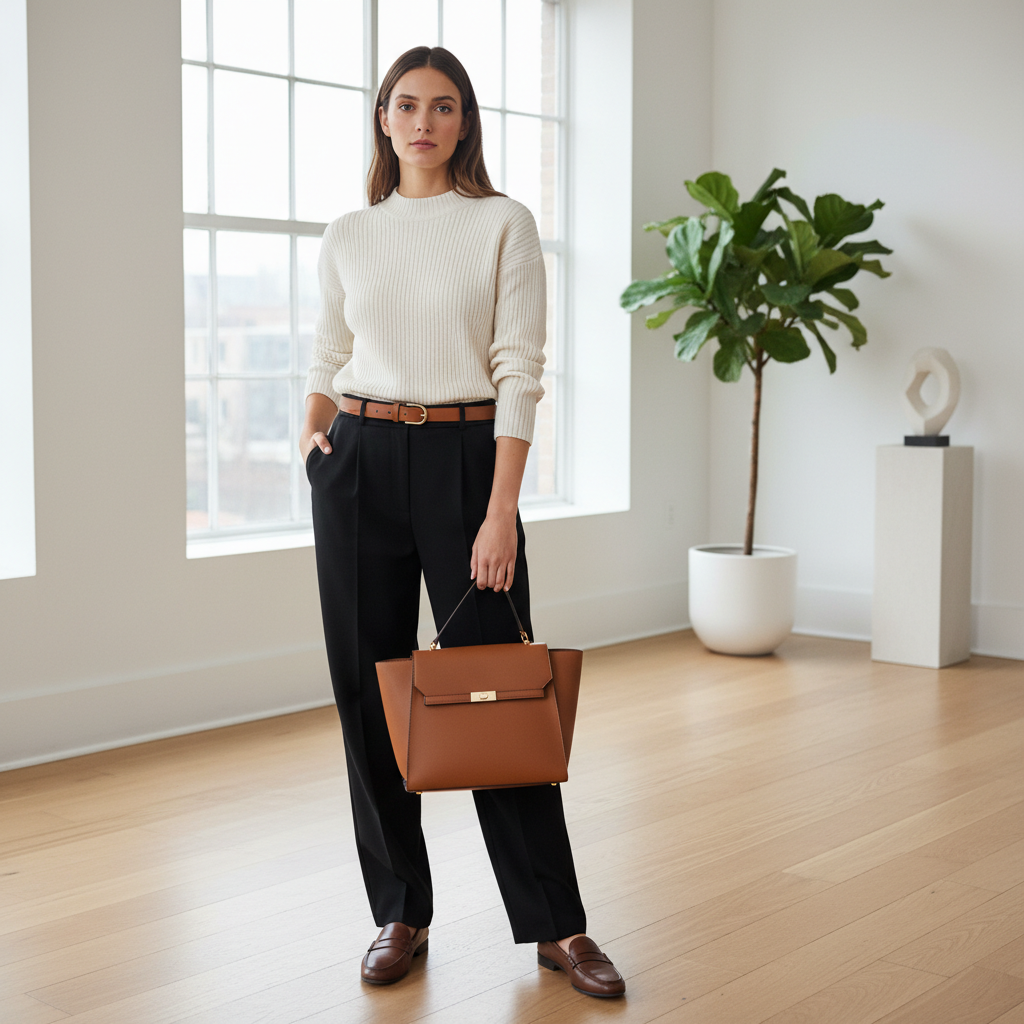
- Relaxed trousers + knit top + blazer + loafers
- Midi dress + denim jacket + low-profile sneaker
Weekend brunch
- Wide-leg jeans + tank + linen button-down + sandals
- Skirt + tee + structured bag + simple jewelry
Travel days
- Ponte pants + tee + trench + sneaker
- Soft jumpsuit + light layer + crossbody bag
According to CDC, comfortable, well-fitting footwear matters for stability and injury prevention in many everyday contexts, especially if you’ll be walking more than usual. If you deal with foot pain, it may be worth asking a podiatrist for guidance rather than forcing trendy shoes.
A simple planning method: 10 minutes on Sunday, easier mornings all week
If mornings feel chaotic, do a tiny bit of pre-thinking. Not full outfit planning if you hate that, just remove the obvious friction.
Try this quick routine
- Pick 2 bottoms you’ll wear most, like jeans and trousers.
- Pick 4 tops that work with both bottoms.
- Choose 1 layer that elevates, like a blazer, trench, or cardigan.
- Set 2 shoes by the door, one sneaker, one “polished flat.”
- Add one accessory default, like small hoops or a watch.
That’s enough to create 8–10 combinations without feeling boxed in, and it keeps casual outfits for women consistent across the week.
Cheat sheet: outfit formulas, best for, and why they work
Use this table when you want a fast decision without overthinking.
| Outfit formula | Best for | Why it looks put-together |
|---|---|---|
| Straight jeans + tee + blazer | Work, errands, dinner | Structured layer adds shape |
| Wide pants + tank + cropped jacket | Warm weather, casual office | Balanced proportions |
| Midi dress + sneakers | Travel, weekends | One-piece ease, sporty finish |
| Leggings + long top + trench | Busy days, transitional weather | Outerwear creates polish |
| Skirt + knit + flats | Brunch, casual dates | Texture mix reads intentional |
Common mistakes that make casual look sloppy
Not everything needs “fixing,” but a few patterns show up a lot when casual outfits feel off.
- Too many relaxed items at once: it can look like pajamas even if the pieces are nice.
- Ignoring shoe condition: dirty soles and worn heels pull attention fast.
- Over-accessorizing basics: when you add too many trendy pieces, the outfit stops feeling easy.
- No waist definition ever: if you hate tucking, try a half-tuck, a belt, or a cropped layer.
- Buying “fantasy life” items: beautiful, but they don’t match your actual schedule.
Key takeaway: casual looks best with one clear focal point, a great jacket, a clean shoe, a strong color, or a flattering pant shape.
Conclusion: build repeatable outfits, then refine
The easiest way to feel better in everyday clothes is to choose a couple of silhouettes, make sure your core pieces mix well, and rely on a few outfit formulas you genuinely enjoy wearing. When you do that, casual outfits for women stop feeling random and start feeling like your style.
If you want a simple next step, pick one “default” shoe and one “default” layer this week, then rebuild your outfits around those two anchors.
FAQ
What are the easiest casual outfits for women that still look polished?
Straight-leg jeans with a fitted tee and a blazer is hard to beat, it’s comfortable but has structure. If you prefer dresses, a midi dress with clean sneakers gives the same effect with less effort.
How do I make jeans and a t-shirt look less basic?
Add one intentional element: a structured layer, a belt, or a shoe upgrade. Even switching from running shoes to minimal sneakers or loafers changes the whole tone.
How many pieces do I need for an everyday casual wardrobe?
Many people can cover most weeks with 12–16 core items plus seasonal extras. The real win is choosing pieces that work together, not hitting a specific number.
What shoes go with most casual outfits?
Clean low-profile sneakers, loafers, and simple flat sandals tend to match the widest range. If you walk a lot or deal with discomfort, support matters, and a professional opinion may help.
How can I dress casual in a business-casual office?
Keep the base simple, trousers or dark denim with a knit top, then add one structured item like a blazer. Avoid overly distressed denim and overly sporty shoes unless your office culture allows it.
How do I choose colors so everything matches?
Start with two neutrals you actually wear, then add one or two accent colors you’ll repeat. If you keep buying “pretty” colors that don’t pair easily, your closet will feel bigger but outfits get harder.
Can leggings count as a casual outfit without looking sloppy?
Yes, but the styling matters. Choose thicker leggings, add a longer top, and finish with a more structured layer or a shoe that looks intentional rather than worn out.
Want a more effortless way to get dressed?
If you’re trying to streamline mornings, it can help to save 2–3 go-to formulas in your notes and shop only for pieces that complete those formulas, not random “cute” items. If you’d rather keep it even simpler, build around one neutral palette and one signature layer, your outfits start assembling themselves.