
men tactical vest outdoor style works when it looks intentional, not like you grabbed random “gear” and hoped it passed as an outfit. The vest is a strong silhouette, lots of pockets, often a tougher fabric, so the rest of what you wear has to calm the look down or support it on purpose.
If you’ve tried one and felt bulky, noisy, or “too much,” you’re not alone. Most misses come from sizing, wrong layering weight, and mixing it with pieces that fight for attention, like oversized hoodies, extra-baggy pants, and loud graphics.
This guide breaks down what to look for in a tactical vest, how to choose a vest for your body and climate, and a few outfit formulas you can repeat without overthinking, plus practical notes on comfort and safety for outdoor use.
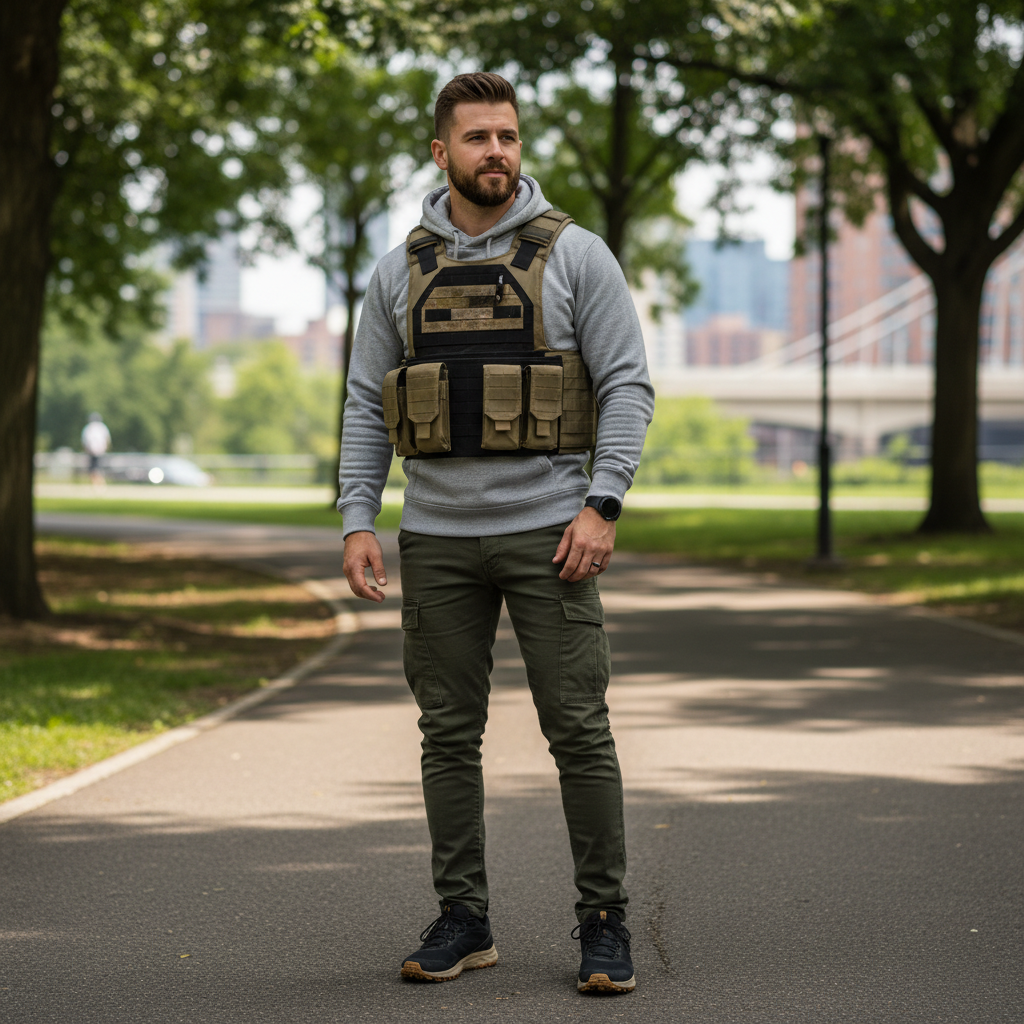
Why tactical vests look great on some guys and awkward on others
Most tactical vests are built with function first: multiple pockets, reinforced seams, and a boxier cut so you can layer. That’s a gift outdoors, but in everyday outfits it can create a “floating chest armor” effect if everything else is also roomy.
- Proportion issues: a long vest over a long hoodie can shorten your legs visually, especially with wide pants.
- Too much texture: rugged nylon + heavy fleece + bulky cargos can read costume-like in casual settings.
- Color conflict: mixed camo, bright logos, and high-contrast panels often compete, the vest should usually be the statement.
- Wrong context: some designs are clearly range or duty-inspired, and in daily wear they may feel out of place.
When you want men tactical vest outdoor style that feels modern, the trick is balancing the vest with cleaner basics and dialing in fit.
Choosing a vest: fit, fabric, and features that matter
Before outfits, get the right base piece. You don’t need “maximum pockets,” you need the right cut and material for how you’ll actually wear it.
Fit checklist (quick and honest)
- Shoulders: shoulder line should sit near your natural shoulder, not droop onto your upper arm.
- Chest: zipped up, you should still be able to take a full breath and move your arms without pulling.
- Length: a good everyday length usually ends around mid-hip, longer can work but needs slimmer pants.
- Armholes: too tight feels restrictive, too large makes the vest look like a bib.
Fabric guidance
- Nylon/Poly ripstop: common, durable, often water-resistant, great for travel and light hikes.
- Cotton canvas: softer, more “workwear,” easier to style casually, can feel heavier when wet.
- Mesh panels: helpful in warm states, but can look overly technical if the design is busy.
According to REI, layering and fabric choice matter because comfort and temperature regulation change quickly with activity and weather, so treat the vest as part of your system, not a standalone “look.”
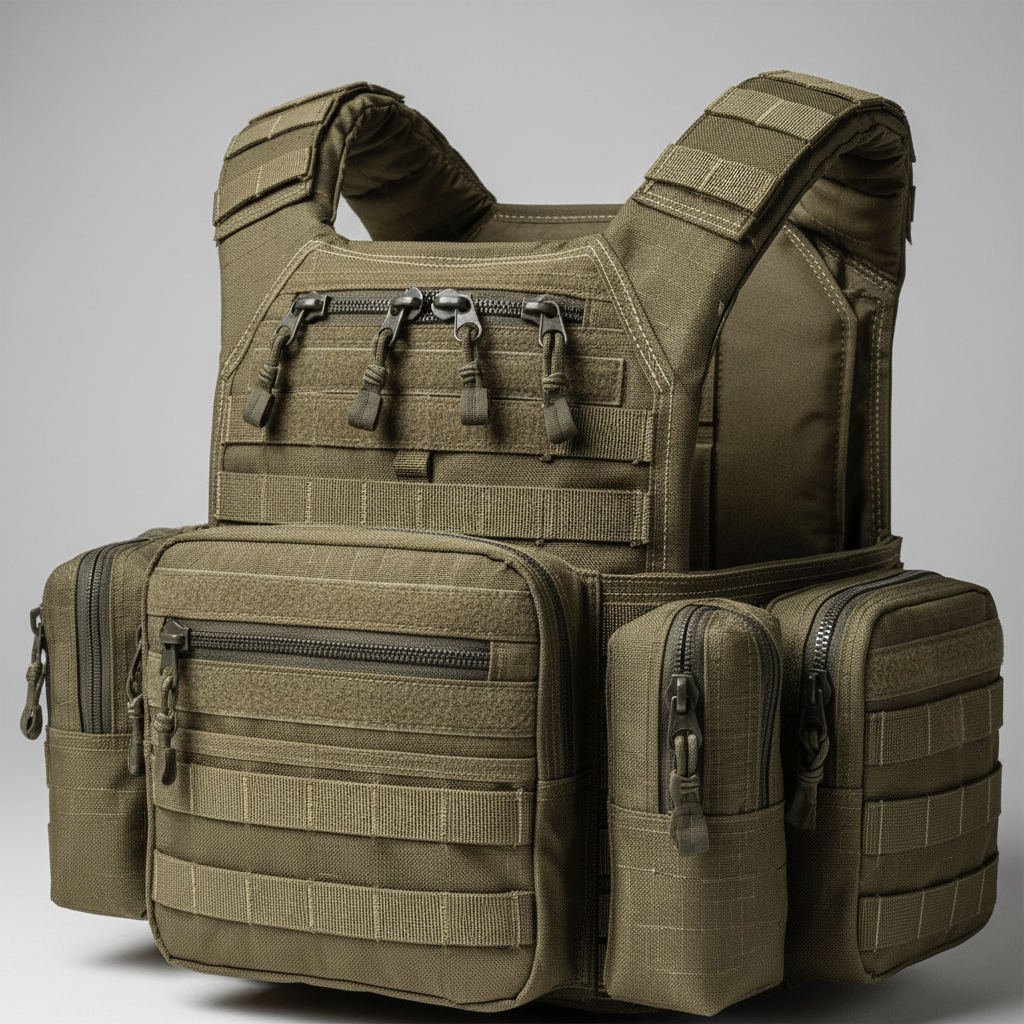
A simple style map: 3 outdoor looks and when to use them
There are a few “lanes” where a tactical vest makes sense. Pick one lane per outfit, that alone fixes most styling problems.
| Style lane | Best for | Vest vibe | Easy pairing |
|---|---|---|---|
| Trail Utility | Hiking, fishing, camping | More technical, lightweight | Merino tee, trail pants, hikers |
| Workwear Outdoor | Farmers markets, weekends, travel | Canvas or muted ripstop | Flannel, straight jeans, boots |
| Urban Outdoor | City walks, casual meetups | Clean lines, fewer patches | Solid hoodie, tapered cargos, sneakers |
If you’re chasing men tactical vest outdoor style for everyday wear, “Urban Outdoor” is the safest entry point: fewer tactical signals, more clean basics.
Outfit formulas you can repeat (without looking like a cosplay)
These are simple on purpose. If you’re unsure, choose one formula, keep colors tight, and let the vest do the talking.
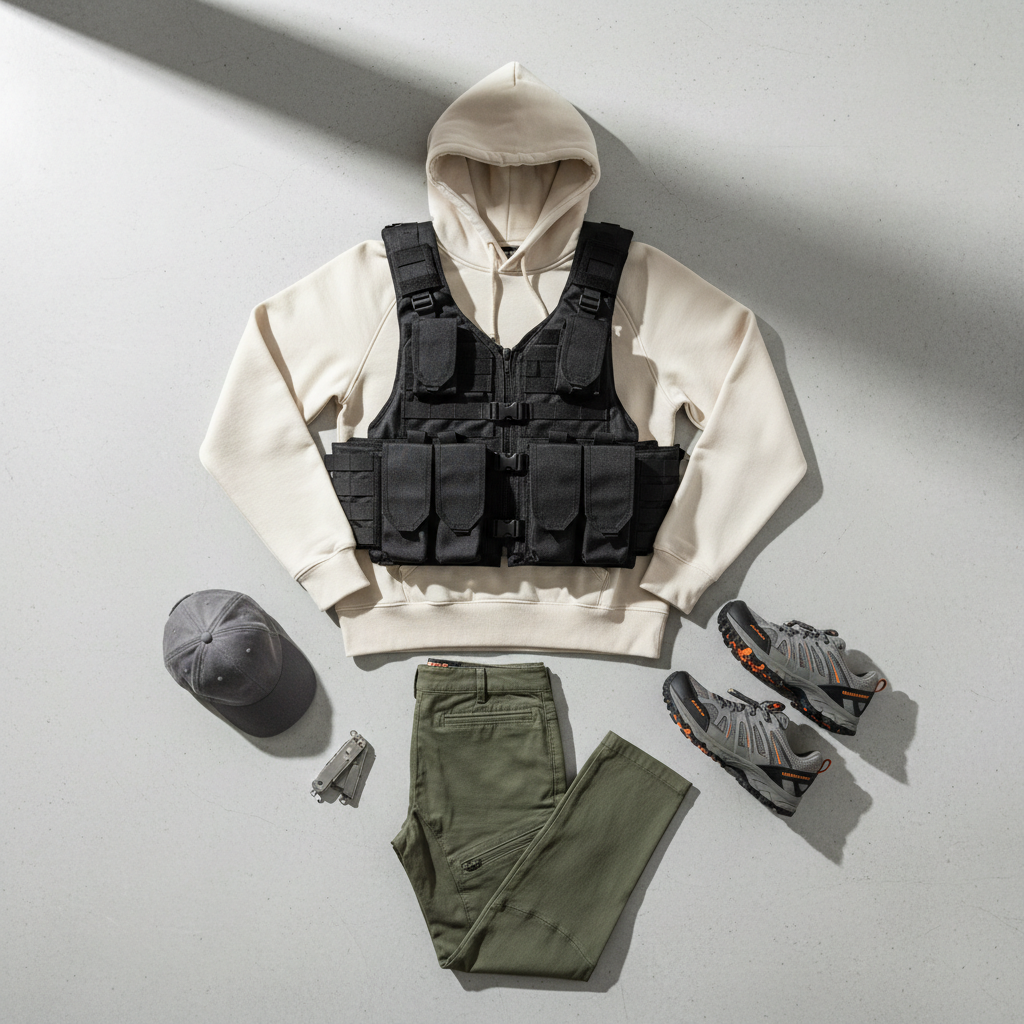
Formula 1: Vest + hoodie + tapered pants
- Pick a solid hoodie, minimal graphics.
- Choose tapered cargos or tech chinos, avoid ultra-baggy fits at first.
- Footwear: trail sneakers, low-profile hikers, or clean running shoes.
Formula 2: Vest + overshirt/flannel + denim
- Works great with canvas-style vests, less “tactical,” more rugged.
- Keep the flannel colors muted, earth tones photograph well and feel natural outdoors.
- Boots or sturdy sneakers keep it grounded.
Formula 3: Vest + technical base layer + trail pants
- Best when you actually need function: pockets, quick access, airflow.
- Go monochrome or two-tone so it looks cohesive even when you sweat.
- Add a packable shell if weather changes, the vest shouldn’t be your only outer layer.
Practical wear tips: comfort, movement, and heat management
A vest is easy to like for storage, but if it rides up, swings around, or traps heat, you’ll stop wearing it. Small tweaks make it feel “built for you.”
- Load pockets evenly: heavy gear on one side twists the vest, it also looks sloppy.
- Use the adjustment points: many vests have side straps, cinch just enough to reduce bounce.
- Mind the neckline: high collars can rub with backpacks, try a crew neck base layer.
- Plan for sweat: in warmer climates, a breathable tee and a lighter vest beat layering thick cotton.
According to CDC, heat stress can become a risk during outdoor activity, especially in high temperatures and humidity, so if your vest choice increases heat retention, consider lighter layers and take breaks, and consult a professional if you have health concerns.
Common mistakes (and what to do instead)
- Mistake: too many “tactical” signals at once
Fix: vest as the statement, keep the rest clean, solid colors, minimal patches. - Mistake: vest is oversized “for layering,” but you never layer
Fix: buy for how you wear it most days, then size up only if you truly need thick mid-layers. - Mistake: mixing three different greens/tans
Fix: pick one main neutral and one accent, black/olive is easy, tan/charcoal also works. - Mistake: ignoring noise and stiffness
Fix: if a vest crinkles loudly, it can feel cheap in daily wear, look for softer hand-feel fabrics.
When your goal is men tactical vest outdoor style that feels natural, less styling “effort” usually reads better.
When to get expert help or rethink the vest choice
If you’re using a tactical vest for real outdoor tasks, hunting, range training, or safety-related work, fit and configuration can matter more than aesthetics. In those cases, it may be worth asking an experienced outfitter, instructor, or gear specialist to check sizing and placement so it doesn’t restrict movement or interfere with other equipment.
If the vest consistently causes shoulder rub, breathing restriction, or overheating, treat that as a signal to change the model or your layering plan, and if you have medical concerns, it’s smart to consult a healthcare professional before strenuous use.
Key takeaways and next steps
- Fit drives everything: shoulder line, armholes, and length decide whether the vest looks sharp or awkward.
- Pick one style lane: trail utility, workwear outdoor, or urban outdoor, then build around it.
- Keep the rest simple: solid hoodie or clean overshirt, tapered pants, neutral footwear.
If you want a fast win, try a muted vest in olive, black, or tan, pair it with a solid hoodie and tapered cargos, then adjust from there based on weather and how much you actually carry.
FAQ
How should a tactical vest fit for casual outdoor style?
It should sit close enough that it doesn’t swing when you walk, but not so tight that zipping changes how you breathe. If you can move your arms freely and the hem hits around mid-hip, you’re usually in a good zone.
Can I wear a tactical vest in the city without looking overdone?
Yes, but choose a cleaner design with fewer patches and avoid stacking other aggressive pieces. A simple hoodie, tapered pants, and low-profile shoes make it read “outdoor-inspired” instead of costume.
What colors work best for men tactical vest outdoor style?
Olive, black, charcoal, and tan are reliable because they pair with denim, cargos, and technical pants easily. If you want a brighter look, keep the vest neutral and add color in the base layer.
Is a tactical vest good for hiking compared to a backpack?
It can be helpful for quick-access items and smaller loads, but many people still prefer a backpack for comfort on longer hikes. For bigger water carry or extra layers, a pack often distributes weight better.
What should I wear under a tactical vest in hot weather?
A breathable synthetic or merino tee usually feels better than thick cotton, especially if you sweat. Mesh-panel vests can help, but the cut and overall airflow still matter.
Are tactical vests safe for outdoor activities?
Often yes, but safety depends on the activity and how the vest fits with other gear. If it restricts movement, overheats you, or interferes with straps or equipment, adjust the setup and consider guidance from a qualified instructor for specialized use.
How do I keep a tactical vest from looking bulky?
Start with a slimmer vest, don’t overload pockets, and balance it with tapered pants. Also keep layers underneath relatively smooth so the vest lies flat.
If you want an easier way to build the look
If you’re trying to dial in a tactical vest outfit but don’t want a closet full of trial-and-error, focus on a small “capsule” around the vest: one solid hoodie, one overshirt, one tapered cargo, and one trail sneaker. Once those basics feel right, adding a second vest style or a seasonal layer becomes straightforward instead of confusing.