
High waisted shorts for curvy bodies can look insanely flattering, but only when the rise, fabric, and cut match how you’re actually shaped, not how a size chart imagines you.
If you’ve dealt with waist gaps, thigh squeeze, pockets that flare, or that annoying “ride up” situation, you’re not alone, it’s usually a pattern issue, not a body issue. The good news is you can shop smarter with a few quick checks, and you can even make borderline pairs work with small tweaks.
This guide breaks down what makes high-rise shorts flattering on curves, how to spot fit problems fast, and what to buy depending on your proportions, plus styling moves that feel realistic for daily life, not just a photoshoot.
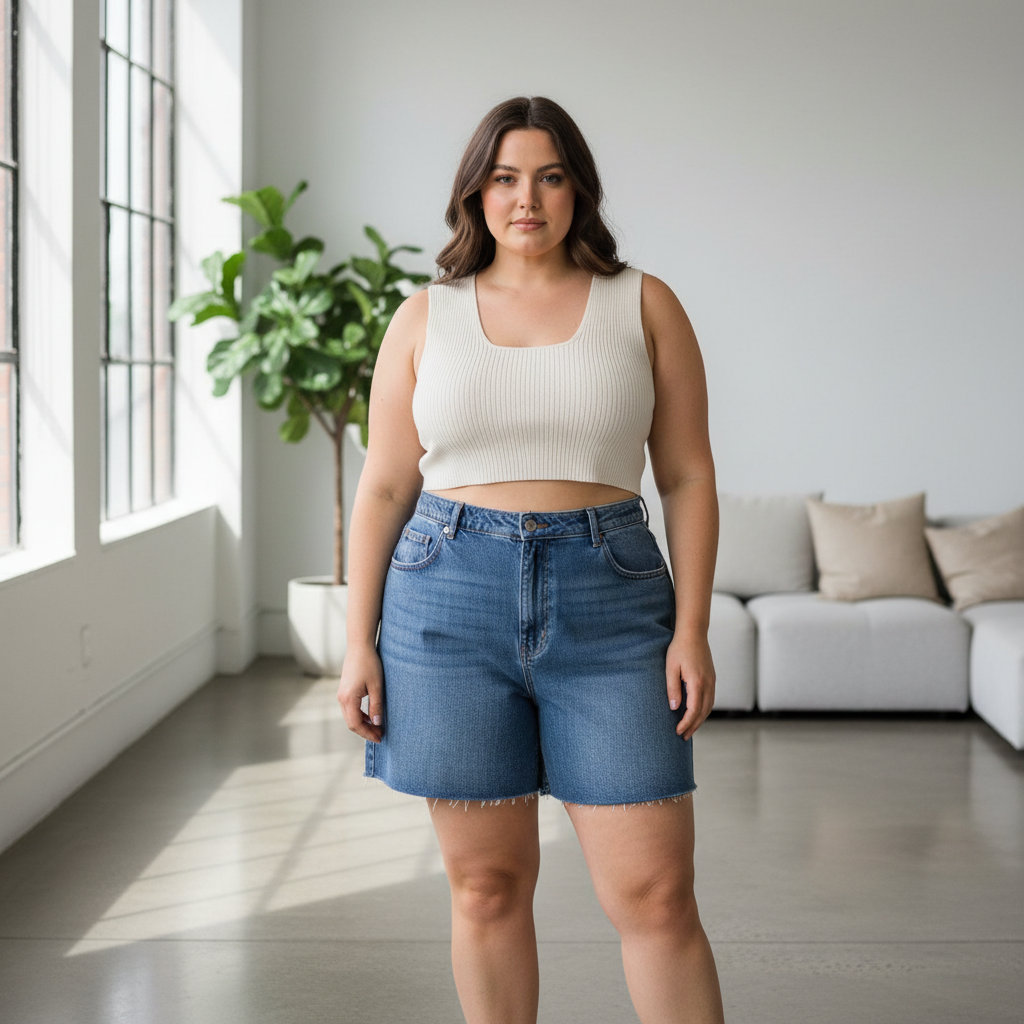
What “flattering” really means for curvy high-rise shorts
Flattering is less about hiding and more about balance and comfort: the waistband stays put, the front lays smooth, and the leg opening doesn’t pinch or climb. If any one of those fails, the whole outfit feels off, even if the shorts technically “fit.”
For many curvy shoppers, the main goal is a clean waist-to-hip line without digging in. That usually comes from a higher rise that reaches the narrower part of the waist, plus enough shaping through the hip and thigh.
- Comfortable waist: waistband hugs without creating a ridge or rolling.
- Smooth front: no pulling at the fly, no wrinkling around the pockets.
- Stable leg opening: enough room to walk, sit, and climb stairs without ride-up.
According to the Federal Trade Commission (FTC), clothing labels and sizing aren’t standardized across brands, so “flattering” often means learning which cuts work for you rather than chasing one number.
Why high waisted shorts often fail on curvy bodies
When high-rise shorts miss the mark, it’s usually one of these real-world issues, and each has a different fix.
1) Waist gap in the back
This happens when the waistband is drafted for a straighter hip-to-waist ratio. You get a fit at the hips, but extra space at the waist, especially when you sit.
2) Thighs fit, but the waist feels tight
Many “standard” cuts scale up by adding width everywhere instead of adding room where curves actually need it. The result is a squeeze at the waist while the thighs still feel close.
3) Pocket flare and hip bulk
Thick pocket bags, wide openings, or certain washes can add visual width right where you may not want it, even when the shorts are comfortable.
4) Ride-up and inner-thigh rubbing
Short inseams plus narrow leg openings often ride up when you walk. Friction is common in summer, and if irritation persists, it may be worth checking with a medical professional.
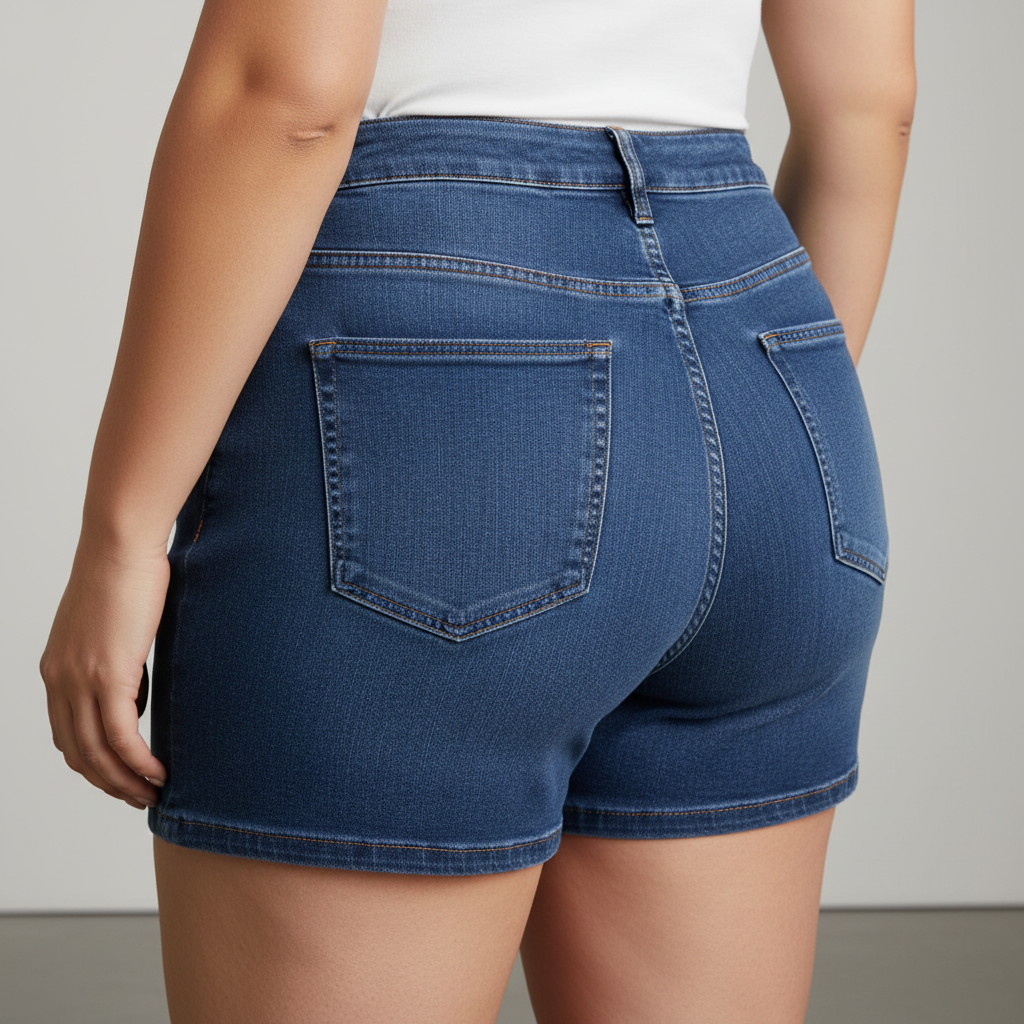
Quick fit checklist: how to tell if a pair will work in 2 minutes
Use this in the fitting room or at home. If you hit two or more red flags, it’s usually not worth “hoping they’ll break in.”
- Waistband test: you can slide two fingers in, but it doesn’t float away from your back.
- Seat test: bend and sit, the back doesn’t pull down and the fly stays flat.
- Pocket test: pockets lay flat and don’t pop open when you move.
- Inner-thigh test: take a few big steps, the hem stays mostly in place.
- Hem balance: leg opening looks even front to back, not “tilted up” in back.
Key point: great high waisted shorts for curvy figures feel stable at the waist and roomy where you move, your thighs and hips.
What to shop for: rise, inseam, fabric, and cut (with a cheat-sheet table)
Shopping gets easier when you translate “curvy” into garment details. Here’s the stuff that tends to matter most.
Rise: high, but not digging
A true high rise usually hits near your natural waist. If you’re shorter-waisted, super-high rises can press into your ribs when sitting, so a “high” rise that’s slightly lower may look cleaner and feel better.
Inseam: the ride-up antidote
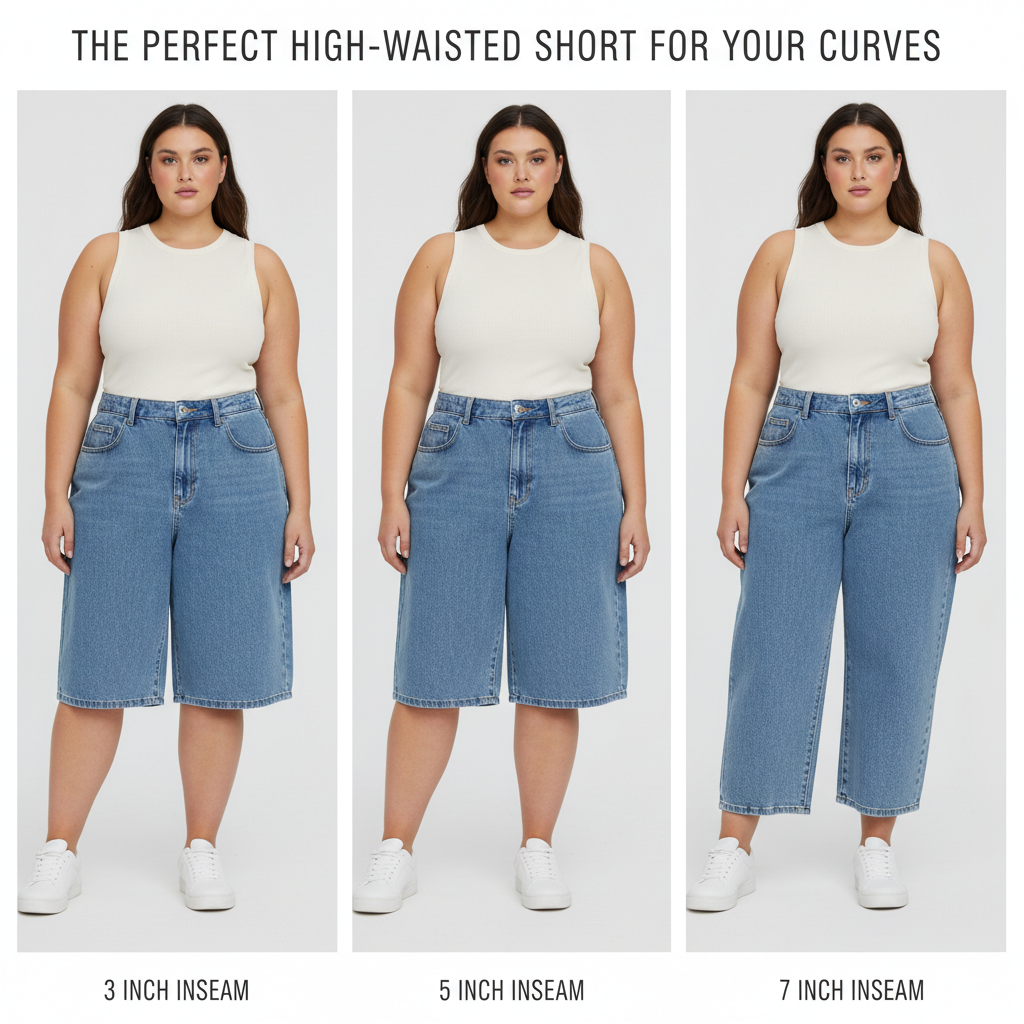
Many curvy shoppers feel best in a 4–6 inch inseam range, but your comfort depends on thigh shape and activities. If you walk a lot, slightly longer inseams often stay put.
Fabric: structure vs stretch
Too much stretch can look great for 10 minutes and then bag out. Too little stretch can feel restrictive. A common sweet spot is a structured cotton with a bit of elastane for movement.
Cut: look for shaping, not just “bigger”
Curvy-friendly shorts often have a contoured waistband, a bit more room through the hip, and a leg opening that doesn’t taper too aggressively.
| What you want | Look for | Try to avoid |
|---|---|---|
| No waist gap | Contoured waistband, curvy fit lines, back darts | Very straight waistbands, stiff non-shaped waist |
| Comfortable thighs | Straighter leg opening, slight A-line, longer inseam | Tapered hems, very short inseams that ride up |
| Smooth front | Flat front, quality zipper, stable denim | Thin stretch denim that ripples near pockets |
| Less hip bulk | Smaller/cleaner pockets, darker wash, minimal whiskering | Heavy distressing at hips, wide pocket openings |
Best high waisted shorts styles for different curvy shapes
“Curvy” isn’t one shape. This is where a lot of shopping advice gets lazy, so let’s keep it practical.
If you have a smaller waist and fuller hips (classic hourglass)
- Prioritize curvy-fit cuts and contoured waistbands.
- High rise with a clean waistband usually highlights your waist without a gap.
- Try a slightly wider leg opening so hips don’t force the hem to flare.
If you carry weight in your lower belly
- Look for a firm waistband and a smooth front (no bunching at the fly).
- Medium-to-high rise often feels more comfortable than ultra-high.
- Dark washes and minimal distressing keep attention on the outfit, not one area.
If you have athletic thighs
- Choose 4–6 inch inseams and avoid tight, tapered hems.
- A-line or relaxed high-rise cuts help prevent ride-up.
- Fabric with a little give matters more than “size up and belt it.”
Practical styling tips that make curvy high-rise shorts look intentional
Once the fit is right, styling is mostly about proportion. You don’t need “rules,” you need a few reliable formulas.
- Half-tuck or cropped top: shows the waist without clinging everywhere.
- Structured layer: a lightweight button-down worn open can visually smooth the midsection.
- Shoe balance: sneakers for casual, low block sandals for length, avoid shoes that cut the ankle if you want a longer leg line.
- Belts with purpose: use when the waist is close but not perfect, not to fix a full size mismatch.
Key takeaway: when high waisted shorts for curvy bodies fit well, simpler tops and cleaner lines usually look more “put together” than piling on tricks.
Fixes, mistakes to avoid, and when to get help
Sometimes the shorts are almost right. Here are realistic adjustments, plus a couple of dead ends to skip.
Easy fixes that actually help
- Tailor the waistband: if hips and thighs fit but the waist gaps, a tailor can often take in the back waist.
- Add anti-chafe support: body glide-style balms or slip shorts may reduce friction for long walks.
- Steam and re-check: some denims settle after washing, test fit after a proper wash cycle.
Common mistakes
- Sizing down for “snatched” and hoping stretch will save it, this often creates pulling and pocket flare.
- Relying on a belt to fix a major waist gap, it bunches fabric and looks bulky.
- Ignoring ride-up in the fitting room, it rarely improves with wear.
When it’s worth professional input
If chafing leads to broken skin, rash, or recurring irritation, it’s smart to consult a medical professional. If fit issues keep happening across brands, a tailor can also explain what alterations are realistic for your proportions, which saves money long-term.
Conclusion: a simple buying plan you can use this week
High-waist shorts can be one of the easiest summer staples for curves, but the win comes from details: a contoured waist, a stable fabric, and an inseam that matches your day. When those three line up, the “flattering” part usually takes care of itself.
Do this next: pick one pair to test using the fit checklist, then compare a second pair with a longer inseam or a different leg opening. That quick side-by-side tells you more than reading ten product pages.
FAQ
What inseam is most flattering for curvy thighs?
Many people find 4–6 inches works well because it reduces ride-up while still feeling like a short. If you walk a lot, slightly longer inseams often feel calmer and stay in place.
How do I stop high waisted shorts from gapping at the back?
Look for curvy-fit or contoured waistbands first. If the shorts fit everywhere else, tailoring the waistband is usually more effective than using a tight belt.
Are stretchy high-rise shorts better for curves?
Some stretch helps with movement, but very stretchy fabric can lose shape and start sagging. A structured denim with a bit of elastane tends to hold a cleaner line through the day.
Do high waisted shorts make your stomach look bigger?
They can if the rise is too high for your torso or the front pulls at the fly. A smooth front panel and the right rise height often look more streamlined than a low rise that cuts across the belly.
What’s the difference between “curvy fit” and regular fit shorts?
Curvy fits usually assume a bigger hip-to-waist difference, so the waistband is shaped to reduce gaps and the hip area has more room. Regular fits are commonly drafted straighter.
How can I reduce chafing in shorts during summer?
Longer inseams and roomier leg openings help, and anti-chafe balms or slip shorts may reduce friction. If irritation becomes persistent or severe, consider checking with a clinician.
Can I wear high waisted shorts if I’m petite and curvy?
Yes, but you may prefer a “high” rise rather than an ultra-high rise, so the waistband doesn’t sit too close to your ribs. Petite cuts or hemming can also keep proportions looking intentional.
If you’re trying to find high waisted shorts for curvy proportions without the return pile, it can help to shortlist two rises and two inseams that match your daily routine, then stick to those filters while you shop, it’s a calmer way to land on pairs you’ll actually wear.