
women huggie hoop earrings small are usually the pair people reach for when they want “put-them-on-and-forget-them” comfort, but the same small size that looks neat can also pinch, snag, or feel too snug if you guess the measurements wrong.
If you have sensitive ears, multiple piercings, or you just want a clean everyday look, small huggies are one of the easiest upgrades you can make, assuming you pick the right inner diameter, metal, and clasp style.
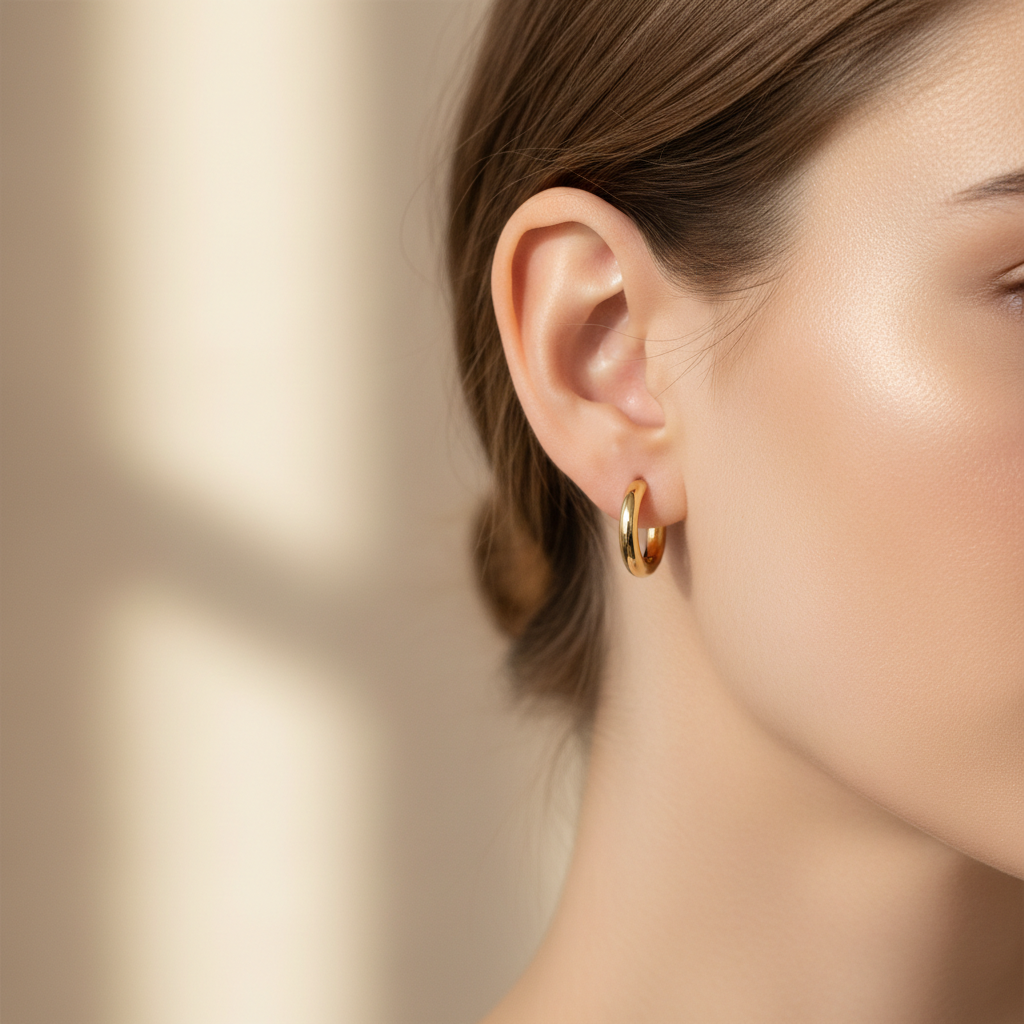
A lot of frustration comes from shopping by photos alone, small hoops can look identical online yet fit completely differently in real life. Below is a practical way to choose size and materials, plus a few “don’t waste your money” checks before you click Buy.
What “small huggie hoops” really means (and why it gets confusing)
Most listings use “small” as a vibe, not a measurement. For comfort and fit, the number that matters is inner diameter, basically the space inside the hoop that has to wrap around your earlobe.
- Inner diameter: Commonly around 6–10 mm for small huggies, but it depends on your lobe thickness and piercing placement.
- Outer diameter: How big the hoop looks from the front, this can be misleading because thicker hoops look larger.
- Gauge/post thickness: Often 20g or 18g for standard lobe piercings, mismatching gauge can irritate your piercing.
Here’s the part many people miss, a “7 mm huggie” might fit great on one ear and feel tight on another if your piercing sits higher or your lobe is fuller. Size names don’t account for that.
Why small huggies feel uncomfortable: the real-world reasons
When small hoops bother you, it’s rarely because “huggies are uncomfortable.” It’s typically one of a few fixable mismatches.
- Inner diameter too tight: The hoop compresses the lobe, leaving soreness after a few hours.
- Chunky profile on a small diameter: A thicker tube eats up inner space, so it feels tighter than the measurement suggests.
- Closure pressure point: Some click-top hinges create a tiny edge that presses into the lobe or cartilage area.
- Metal sensitivity: Itching, heat, or redness can be from nickel or mixed alloys, not the size.
- Sleeping and headphone friction: Small huggies are “sleep-friendly” only if the hinge doesn’t sit where you rest your head.
According to the American Academy of Dermatology Association, nickel is a common cause of allergic contact dermatitis, so if you react to jewelry, it’s worth treating metal choice as a priority, not an afterthought.
Quick self-check: which small huggie size is likely to fit you?
You don’t need special tools, just a mirror and a ruler, or a printable sizing guide if a brand provides one. If you only do one thing, do this.
Fit checklist (fast but surprisingly accurate)
- Look at where your piercing sits, centered on the lobe usually needs a bit more room than a lower placement.
- Gently pinch your lobe, if it’s thicker, lean toward 8–10 mm inner diameter for comfort.
- If you want a true “hug,” pick the smallest size that does not press into the lobe when you smile or talk.
- If you wear a second or third lobe piercing, smaller outer diameter matters for spacing, but don’t sacrifice inner room.
If you’ve had irritation before, consider starting slightly larger, you can always go smaller once you know what your ear tolerates.
A practical sizing table (what to buy for common goals)
Use this as a starting point, not a rulebook. Different hoop thickness and hinge design can shift the “feel” even at the same diameter.
| Goal | Suggested inner diameter | Notes |
|---|---|---|
| Very snug “true huggie” look | 6–7 mm | Works best for thin lobes, can feel tight if hoop is thick |
| Everyday comfort for most lobes | 8–9 mm | Good balance of snug look and wearability |
| Comfort-first, sensitive ears | 9–10 mm | Less pressure, easier with click-top closures |
| Second piercing / stacked look | 6–8 mm | Choose based on spacing, thinner hoops often layer better |
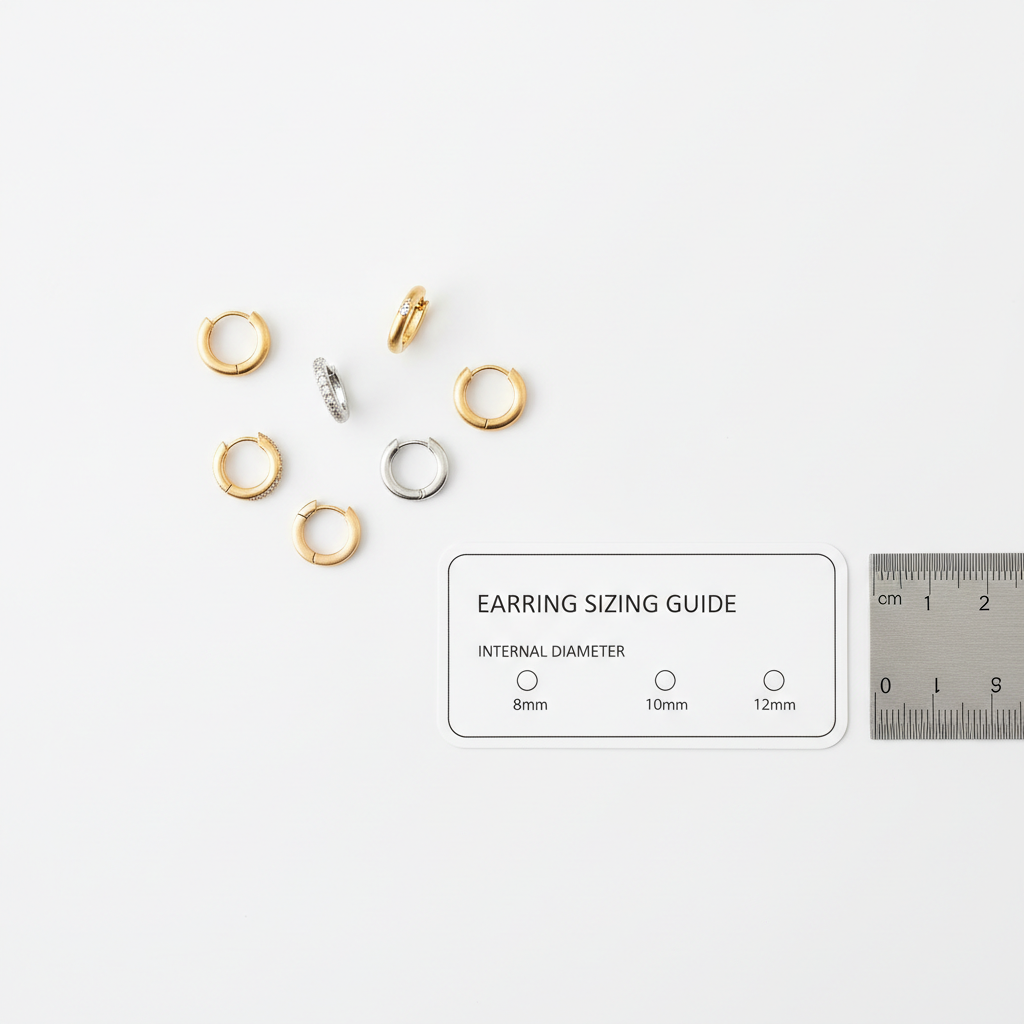
Key takeaway: when you compare products, compare inner diameter and hoop thickness together, not just one number.
Materials and closures: what matters most for daily wear
For women huggie hoop earrings small, comfort is half sizing and half build quality. Tiny engineering differences show up fast because the hoop sits close to skin all day.
Metal choices (and what they’re good for)
- 14k/18k gold: Usually a safer bet for sensitive ears, but alloy mix varies by maker.
- Platinum: Durable and often well-tolerated, typically higher price.
- Sterling silver: Looks great, may tarnish, some people react depending on alloy and plating.
- Stainless steel / titanium: Often used for sensitive wearers, especially titanium, but product labeling quality matters.
If you’ve reacted before, look for clear metal specs and avoid vague listings. According to the U.S. Food & Drug Administration (FDA), “hypoallergenic” is not a strictly defined marketing term across all products, so treat it as a hint, not proof, and rely on material details.
Closures you’ll see most
- Hinged click-top: Easy on and off, check that the hinge sits flush so it won’t poke.
- Latch-back: Can feel secure, sometimes adds bulk behind the lobe.
- Endless hoop: Smooth look, but can be fiddly and easier to bend if thin.
For most people who want low-maintenance daily wear, a well-made click-top huggie is the simplest, as long as the post aligns cleanly and doesn’t scrape the piercing.
How to style small huggie hoops without looking “too basic”
Small huggies are subtle, which is exactly why they’re useful. They become “styled” when you control finish, texture, and what sits next to them.
- Go monotone for polish: All gold or all silver across studs, huggies, and necklaces reads intentional.
- Mix textures, not colors: Smooth huggie plus a pavé or twisted second piece gives depth without shouting.
- Match your hair routine: If you wear hair tucked often, a slightly thicker profile shows better in photos.
- Work with your face shape: Very small hoops tend to flatter sharper looks, while medium huggies add softness, but it’s personal.
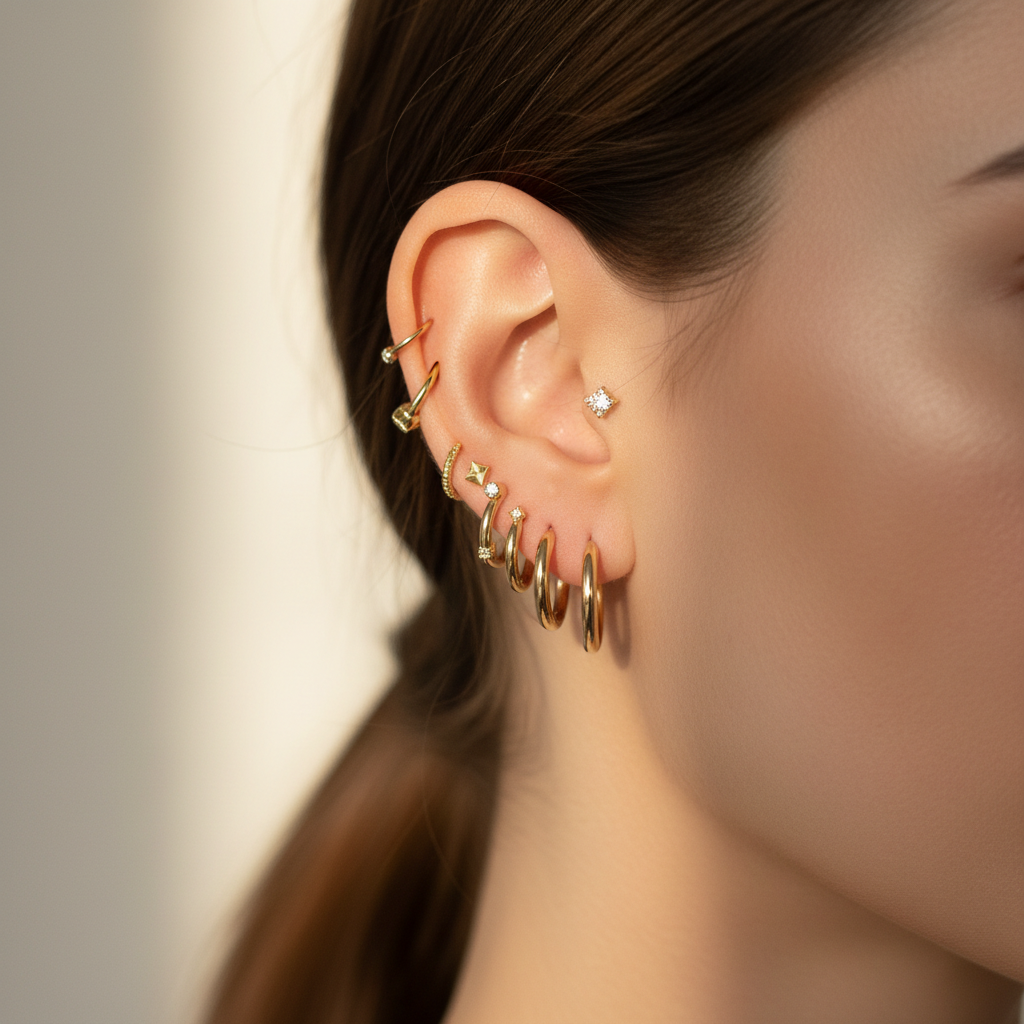
If you’re building a “capsule jewelry” set, small huggies make a strong anchor piece, then you rotate studs or charms to change the vibe.
Buying checklist: avoid returns and surprises
Before you buy, skim the listing for specifics. If a product page hides details, it usually means you’ll be the one guessing.
- Inner diameter listed in mm, not just “small.”
- Hoop thickness (tube width), especially if you want a true snug fit.
- Post gauge compatible with your piercing, commonly 20g or 18g.
- Metal composition stated clearly, not only “hypoallergenic.”
- Closure type and whether the hinge is internal or external.
- Return policy for earrings, many stores restrict returns for hygiene reasons.
Practical tip: when you see a model photo, look for lobe thickness and piercing placement, it can be more informative than a ruler image.
Care, comfort, and when to ask a professional
Even a great pair can feel “off” if aftercare is sloppy. Small hoops sit close to skin, so oil, hair product, and sweat build up faster than you expect.
- Clean gently, many people do well with mild soap and water, then dry fully.
- Avoid twisting the hoop in the piercing, friction can irritate tissue.
- If you sleep in huggies, choose a smooth hinge and watch for pressure spots.
- If redness or itching shows up, consider pausing wear and switching metals.
If you notice swelling, persistent pain, discharge, or a rash that doesn’t calm down, it’s smart to stop wearing the earrings and consult a licensed piercer or healthcare professional, infections and allergic reactions can look similar early on, and guessing often drags it out.
Conclusion: the easiest way to get small huggies right
The simplest path is to treat size as inner diameter plus thickness, then treat comfort as a metal and closure decision. When those three line up, women huggie hoop earrings small become the low-effort everyday piece they’re supposed to be.
If you want an easy next step, measure your current favorite pair or your earlobe thickness, then shortlist two inner diameters one “snug” and one “comfort,” and pick the one that matches how long you plan to wear them each day.
FAQ
What size counts as small huggie hoop earrings for women?
Many brands call 6–10 mm inner diameter “small,” but the right choice depends on your lobe thickness and piercing placement, so measurements matter more than the label.
Why do my small huggie hoops pinch my earlobe?
Most often the inner diameter is slightly too tight or the hoop is thick, which reduces inner space. A larger inner diameter or a slimmer profile usually fixes the pinching.
Are small huggie hoop earrings good for sensitive ears?
They can be, but sensitivity usually comes from metal or plating. Look for clear material specs like solid gold or titanium, and be cautious with vague “hypoallergenic” claims.
Can I sleep in small huggie hoops?
Many people do, especially with smooth click-top designs, but comfort depends on hinge placement and how you sleep. If you wake up sore, switch to a slightly larger diameter or a flatter closure.
What’s the difference between inner diameter and outer diameter?
Inner diameter tells you how much room the hoop has around your lobe, outer diameter is how big it looks. For comfort and fit, inner diameter tends to predict success better.
Do small huggies work for second piercings?
Often yes, because they sit close and layer well, but you’ll want to check spacing so the hoop doesn’t crowd your first piercing jewelry.
How do I keep huggie hoops from tarnishing?
Keep them dry, wipe after wear, and store away from humidity. Sterling silver may still tarnish over time, so occasional gentle polishing can help.
If you’re trying to pick women huggie hoop earrings small for everyday wear and you want fewer surprises, it helps to share your piercing placement, preferred metal, and whether you plan to sleep in them, then you can narrow to a couple of sizes instead of guessing from photos.