
Best hair straighteners for thick hair usually come down to three things that don’t sound glamorous but change everything: enough heat stability, plates that grip without snagging, and features that keep you from doing 10 passes per section.
Thick hair can mean dense hair, coarse strands, or both, and those behave differently under heat. A flat iron that works for fine hair can feel “weak” on thick hair, while an ultra-hot tool can leave you smooth for an hour and then puffy again if the technique or settings miss the mark.
This guide gives you a realistic way to choose, not a one-size-fits-all list. You’ll get a comparison table, a quick self-check to match your hair type, what specs actually matter, and how to straighten thick hair faster with less damage.
What thick hair really needs from a straightener
Most people shopping for a flat iron focus on max temperature, but thick hair usually needs consistent heat delivery more than “as hot as possible.” If the plates lose heat the moment they touch a dense section, you end up compensating with extra passes, and that’s where dryness and breakage creep in.
Here’s what tends to matter most in real bathrooms:
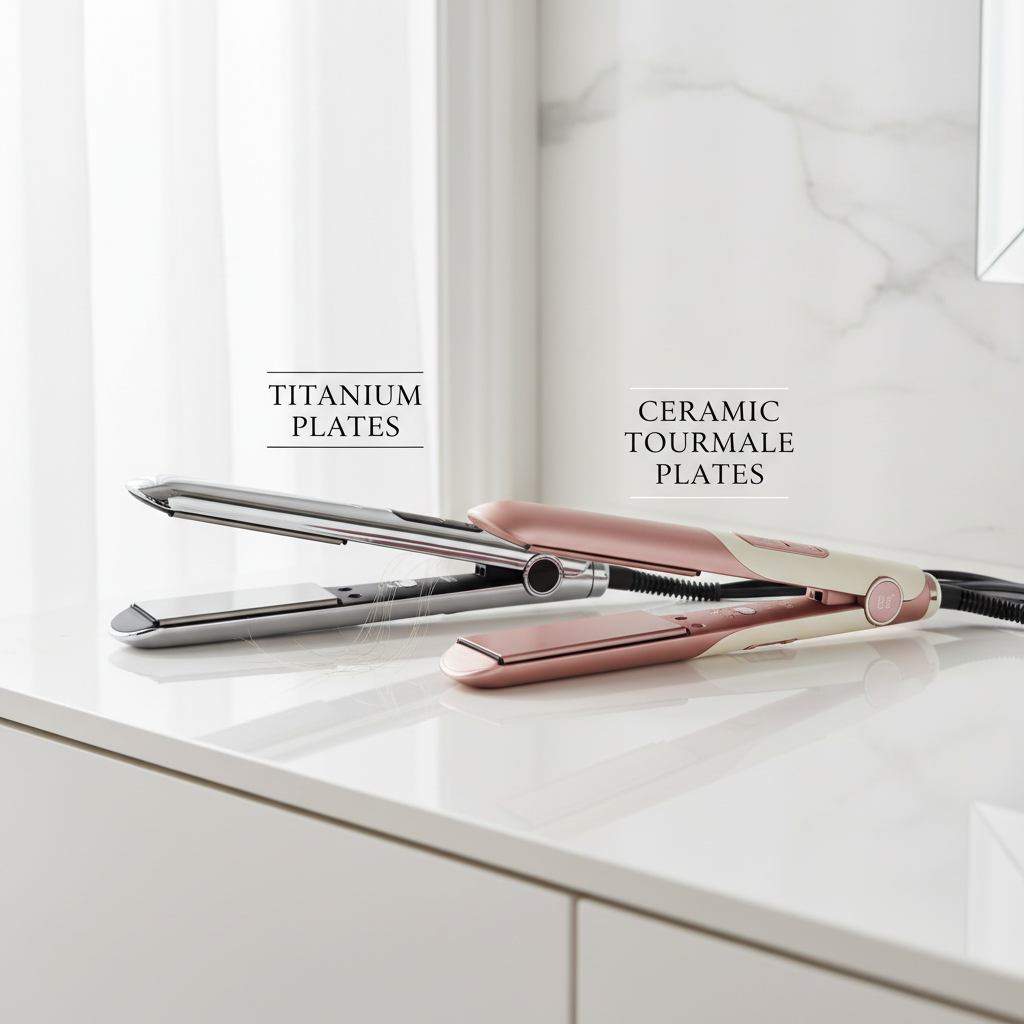
- Plate material: Titanium heats fast and stays stable, ceramic tends to be gentler and distributes heat more evenly, tourmaline coatings often help reduce static and boost shine.
- Plate size: 1.25–2 inch plates can speed up dense hair sessions, but very wide irons reduce control near roots and bangs.
- True temperature control: Look for adjustable settings, not a single “high/low” switch.
- Even pressure and smooth glide: If the hinge pinches or the plates don’t align, thick hair gets snagged, and you’ll feel it.
- Heat recovery: The iron should bounce back quickly between sections so you don’t keep turning the temp up.
According to the American Academy of Dermatology Association, using the lowest heat setting that still works for your hair can help reduce heat damage, and limiting repeated passes matters more than chasing a perfect number on the dial.
Quick comparison table: which type fits your thick hair?
If you just want to narrow options fast, use this as a starting point. Brands differ, but these patterns are common.
| Hair situation | Plate material that often fits | Temperature range to try | Why it works |
|---|---|---|---|
| Dense but fine strands | Ceramic / ceramic-tourmaline | 300–370°F | Even heat, lower snag risk, less scorching |
| Coarse, resistant, very thick | Titanium (quality plates) | 370–410°F | Fast heat transfer, fewer passes when technique is solid |
| Thick + frizz-prone or humid climate | Tourmaline coating or ionic-focused tools | 330–400°F | Helps with static, smoother finish if prep is right |
| Thick curly hair, want sleek but not flat | Ceramic with rounded edges | 340–400°F | More forgiving, can also bevel for soft bends |
| Damaged, colored, or highlighted thick hair | High-quality ceramic, precise controls | 300–360°F | Reduces overexposure, prioritizes consistency over intensity |
How to tell what “thick” means for you (it changes the pick)
A lot of “this iron didn’t work” stories are actually a hair-typing mismatch. Thick hair can be about density (lots of strands) or strand width (coarse), and those need different approaches.
60-second self-check
- Density: Put hair in a ponytail. If the circumference feels large even when hair air-dries relatively soft, you likely have high density.
- Coarseness: Take one strand between fingers. If it feels wiry and holds shape easily, your strands lean coarse.
- Porosity (how hair absorbs water/product): If hair soaks water fast and frizzes easily, porosity may be higher, which often needs gentler heat and better sealing products.
- Heat tolerance: If you smell “hot hair” quickly or see ends go crispy, you probably need lower temps and fewer passes, even if hair is thick.
If you’re dense-but-fine, an aggressive titanium iron can feel too harsh. If you’re coarse-and-resistant, a mild ceramic iron may force extra passes and ironically cause more damage over time.
Features that actually matter (and what’s mostly marketing)
Some specs look impressive on the box, but thick hair results usually come from a few practical details.
Worth paying attention to
- Adjustable heat with clear increments: Thick hair rarely needs one fixed temperature. You’ll change settings based on air-dry level, humidity, or how healthy ends feel that week.
- Long plate length (often 4–5 inches): Helps cover more hair per pass, especially on long, dense hair.
- Rounded edges: If you want smooth bends or a soft “blowout” finish, squared edges can leave lines.
- Auto shut-off: Not sexy, but it’s a real safety feature if you style early mornings.
- Swivel cord and comfortable grip: Thick hair takes time, and ergonomics matter when your wrist starts complaining.
Often less important than it sounds
- Ultra-high max heat: Many people never need 450°F. If you do, it’s usually because sections are too thick or hair isn’t fully dry.
- “One-pass technology” claims: A truly good tool can reduce passes, but your prep, section size, and speed control the outcome more than slogans.
According to the U.S. Food and Drug Administration, hair smoothing products and heat styling can irritate skin or eyes in some situations; if your scalp gets sensitive, it’s reasonable to lower heat, improve ventilation, and consider checking with a professional stylist or healthcare provider.
Best hair straighteners for thick hair: what to look for by scenario
This is the part most people mean when they search best hair straighteners for thick hair. Instead of naming “the one,” here are the most common shopping scenarios and the spec combo that tends to perform.
If your thick hair is also coarse and resistant
- Plates: Titanium or high-quality titanium-coated plates
- Width: 1.25 inch for control, 1.5–2 inch if you prioritize speed and rarely curl
- Heat range: Up to ~410°F can be useful, but aim to stay as low as still effective
- Why: You want fewer passes, not more heat exposure
If your thick hair is dense but strands are fine
- Plates: Ceramic or ceramic-tourmaline
- Heat control: Precise, with lower options that still stay stable
- Why: Fine strands can scorch even when you have a lot of them
If frizz and humidity ruin your finish
- Plates: Tourmaline coating can help reduce static
- Design: Plates that clamp evenly (no gaps), smooth edges to avoid “ridge marks”
- Why: Your straightening job fails at the cuticle level, not because you didn’t go hot enough
If you travel or style at the gym
- Dual voltage if you travel internationally
- Fast heat-up and reliable temp lock
- Heat-resistant cap/pouch so you’re not waiting 30 minutes to pack it
How to straighten thick hair faster (without frying ends)
A better tool helps, but the speed boost usually comes from prep and sectioning. This is where thick-hair routines quietly win.
Step-by-step that tends to work
- Start fully dry: Thick hair can feel dry on top while the inside stays damp. If you straighten over hidden moisture, you’ll need more passes and may hear sizzling.
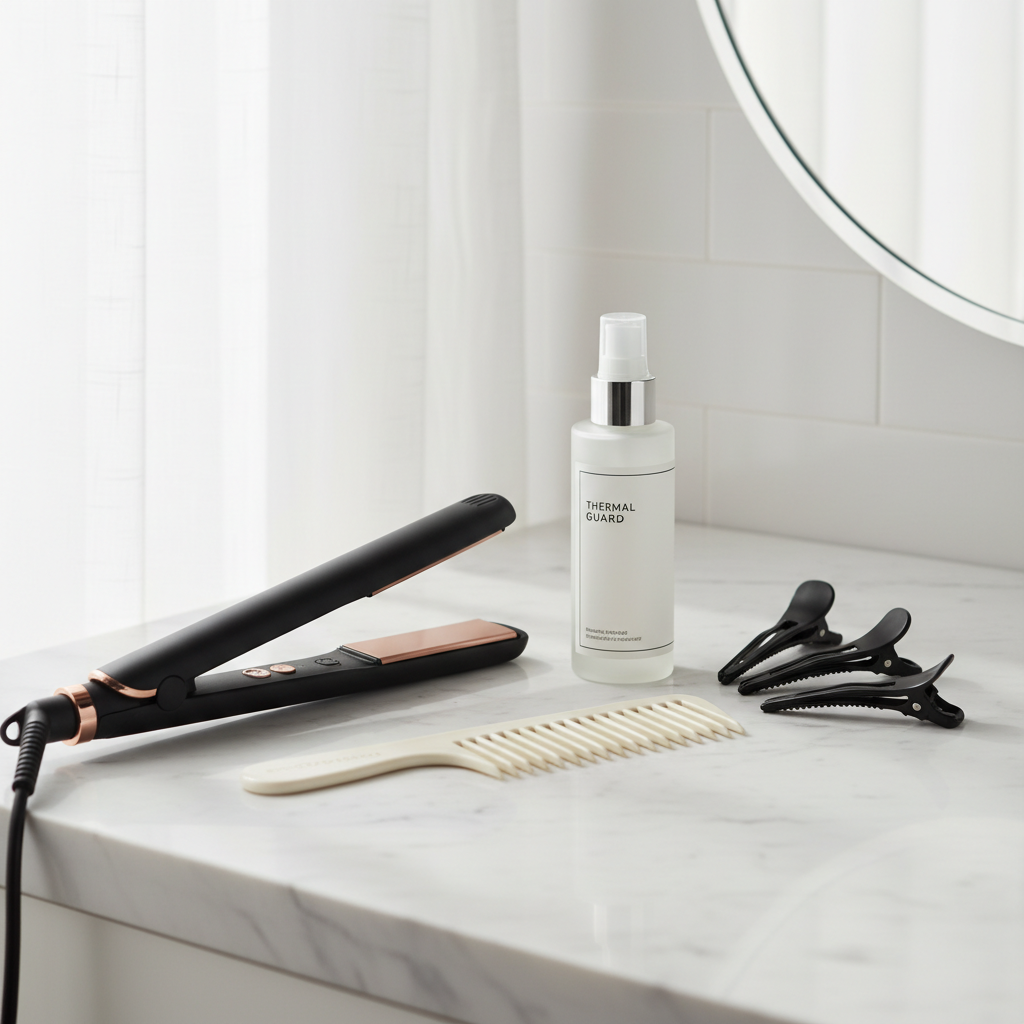
- Use a heat protectant you’ll actually apply: Spray for dense hair, cream/serum for coarse ends, and keep it light near roots if you get oily.
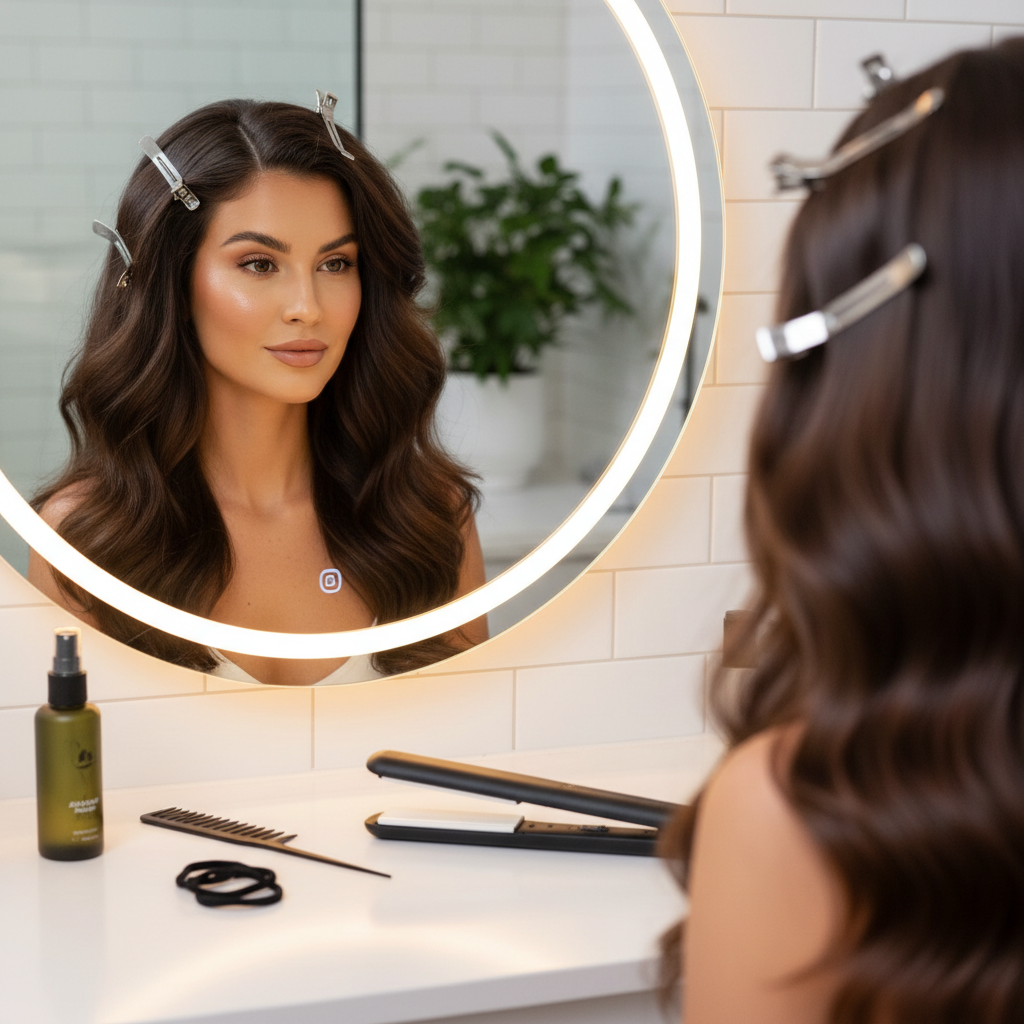
- Section smaller than you think: For dense hair, aim for sections about 1 inch wide and not too thick vertically. If the plates can’t “hug” the section, you’re ironing the outside only.
- One slow pass beats three quick passes: Move at a steady speed, keep consistent tension, and avoid stopping mid-shaft where a crease forms.
- Chase with a brush only if it helps: The “comb chase” method can reduce snagging on coarse hair, but it’s not mandatory.
- Cool-down sets the style: Let each section cool for a moment before touching or pinning it back.
Key takeaways if you want fewer passes: stable heat, smaller sections, and a pace that feels almost boring.
Common mistakes thick-hair people make with flat irons
These show up constantly, even for people who “know how” to straighten hair.
- Turning heat up to compensate for big sections: The result is usually hot outer layers and underdone inner layers, so you go back in again.
- Using the same temperature year-round: Winter dryness, summer humidity, and color services change what your hair can tolerate.
- Flattening roots too aggressively: Many thick-hair types look better with some root volume; pressing hard at the scalp can create a helmet shape.
- Skipping maintenance: Product buildup on plates causes drag. Wipe plates (when cool and unplugged) with a slightly damp cloth, and avoid scraping coatings.
- Heat + oil at the wrong time: Heavy oils before ironing can increase the risk of overheating strands. Many stylists prefer protectant first, then a tiny amount of finishing serum after.
When it’s worth asking a professional
If you’re consistently seeing breakage around the crown, scalp irritation, or sudden texture changes, it may be smarter to pause the heat routine and ask a licensed stylist or a healthcare professional. Sometimes the “problem” is a mismatch between heat, chemical services, and daily routine, not the tool itself.
If your goal is long-term smoothness, a stylist can also suggest a cut shape that cooperates with thick hair, because even the best hair straighteners for thick hair won’t fix a shape that forces puff at the ends.
Conclusion: picking the right flat iron without overthinking it
The best choice usually isn’t the hottest iron, it’s the one that stays stable on dense sections, matches your strand type, and lets you finish with fewer passes. If you’re unsure, start with adjustable heat, quality plates, and a width that fits how you style day to day.
If you want one action step today, do this: reduce section size by about a third on your next session, lower heat slightly, and aim for one controlled pass. Many people get a smoother result immediately, and their ends stop feeling “tired” after a few weeks.