
Best leather jackets for men in 2026 come down to three things most guys underestimate: leather quality, fit through the shoulders, and choosing a style that matches how you actually dress.
If you have ever tried one on, loved it in the mirror, then never wore it again, the issue usually is not “you” it is mismatch, too stiff, too loud, or it fights your closet.
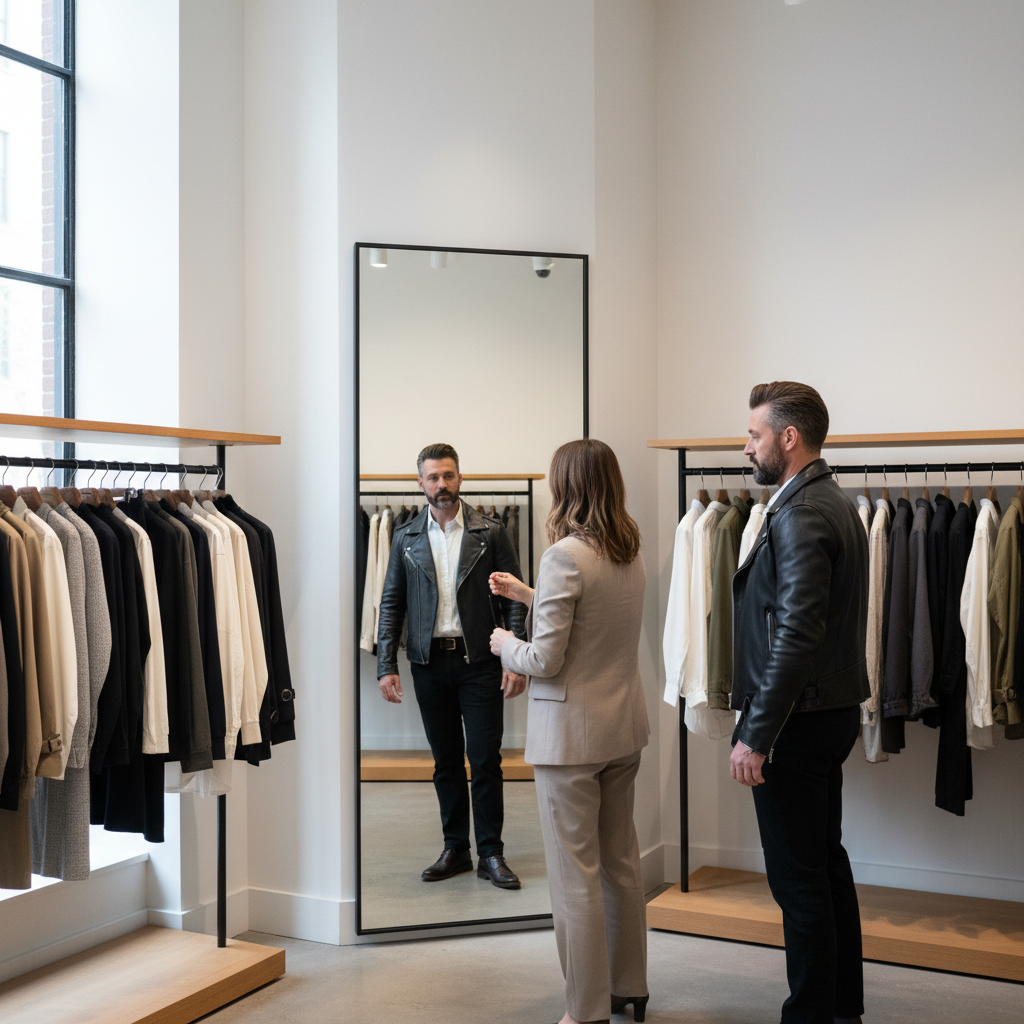
This guide is built to help you buy once and wear for years, with a quick way to pick the right type, spot decent leather, and avoid the common traps like wrong sizing or “fashion leather” that cracks early.
Key takeaways: nail shoulder fit, pick the right leather type for your climate, and treat “cheap hardware and weak lining” as a dealbreaker even if the jacket looks great online.
What “best” means in 2026 (and what it does not)
There is no universal winner, because the best option depends on how you commute, your local weather, and whether you want something rugged or sleek. Still, a few quality signals stay consistent year to year.
- Leather grade and finish: full-grain and top-grain typically age better than heavily corrected leather, which can look perfect at first then wear oddly.
- Construction: clean stitching, reinforced stress points, solid zippers, and a lining that does not feel like a windbreaker.
- Fit: shoulders must sit correctly, sleeves end near the wrist bone, body length matches your proportions and the style.
- Versatility: a jacket you can wear 2–3 times a week usually beats a statement piece you wear twice a year.
According to the Federal Trade Commission (FTC), leather labeling can vary, and terms like “genuine leather” are not a quality guarantee on their own, so you still need to judge thickness, finish, and construction.
Leather types and which one fits your lifestyle
When people search for the best leather jackets for men, they often focus on the silhouette, but leather choice decides comfort, weight, and how the jacket breaks in.
Full-grain vs top-grain vs corrected
- Full-grain: usually shows natural texture, tends to develop the richest patina, can feel stiff at first.
- Top-grain: often slightly refined, still durable, commonly easier to wear right away.
- Corrected/coated: more uniform look, can be fine at certain price points, but heavy coatings may crack or peel with hard use.
Common hides you will see
- Cowhide: classic, durable, can run heavier, great for motorcycle styles.
- Lambskin: softer and lighter, excellent for a clean fashion fit, less forgiving if you are rough on outerwear.
- Goatskin: often a sweet spot, grain hides scuffs well, flexible, good everyday option.
- Suede: rich texture, higher maintenance, not ideal for heavy rain or salty winter sidewalks.
Best leather jacket styles for men (and who they suit)
The fastest way to choose is to start with your daily shoes and pants, then pick the jacket that looks “normal” with them. If it looks like a costume with your usual outfit, you will not reach for it.
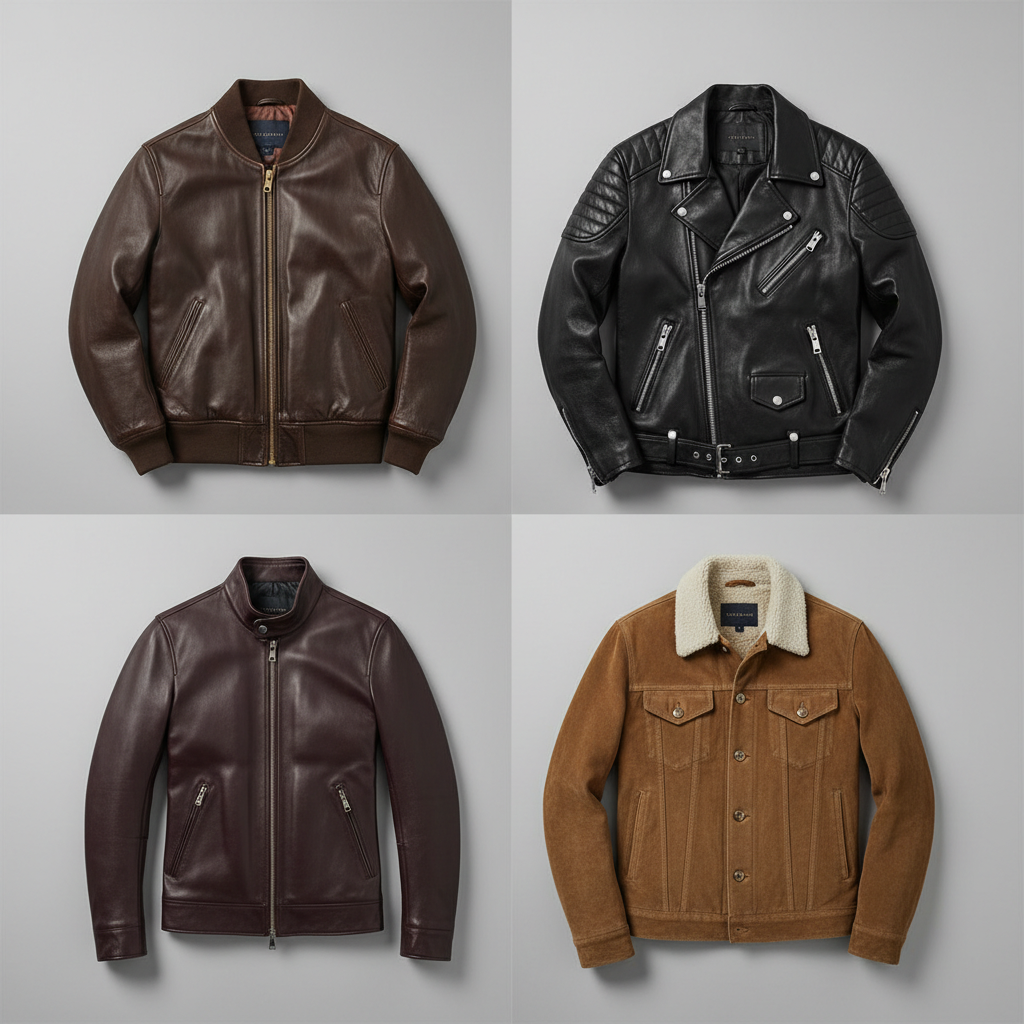
1) Cafe racer (minimal, sharp)
Clean front, short collar, usually the easiest “one jacket” choice. Works well with jeans, chinos, and even tailored casual looks.
2) Moto/biker (hardware, attitude)
Asymmetrical zip and more metal. Great if you already wear boots and rugged denim, trickier with office casual unless you keep it simple and dark.
3) Bomber (comfortable, easy)
Often roomier through the chest, sometimes with ribbed hem and cuffs. Good for broader builds, good for layering, but watch the hem length if you are shorter.
4) Trucker (workwear vibe)
Button front, often slightly longer than a racer. Pairs well with straight jeans and casual sneakers, feels “American classic” when done right.
5) Flight-inspired (heritage, warm)
Think shearling collar or warmer lining. Excellent for colder areas, but can feel bulky indoors or in mild climates.
Quick self-check: which jacket should you buy?
If you feel stuck between two options, use this short checklist. It sounds basic, but it saves people from expensive “closet trophies.”
- Your weekly outfits: if you wear sneakers and tees most days, a simple racer or bomber often wins.
- Your climate: hot states usually do better with lighter leather and minimal lining, cold states may justify heavier hides or insulated lining.
- Your tolerance for maintenance: suede looks incredible, but it demands more care, especially around rain and stains.
- Where you wear it: office casual usually prefers low hardware, matte finish, clean collar.
- How you layer: if you want hoodies underneath, size and cut matter more than brand.
Rule of thumb: if you cannot comfortably drive, hug someone, or reach forward without the jacket fighting you, it is not “breaking in” it is probably the wrong size or cut.
How to evaluate quality fast (without becoming a leather expert)
In-store is easiest, but you can still judge a lot online if you know what to look for in photos and product copy.
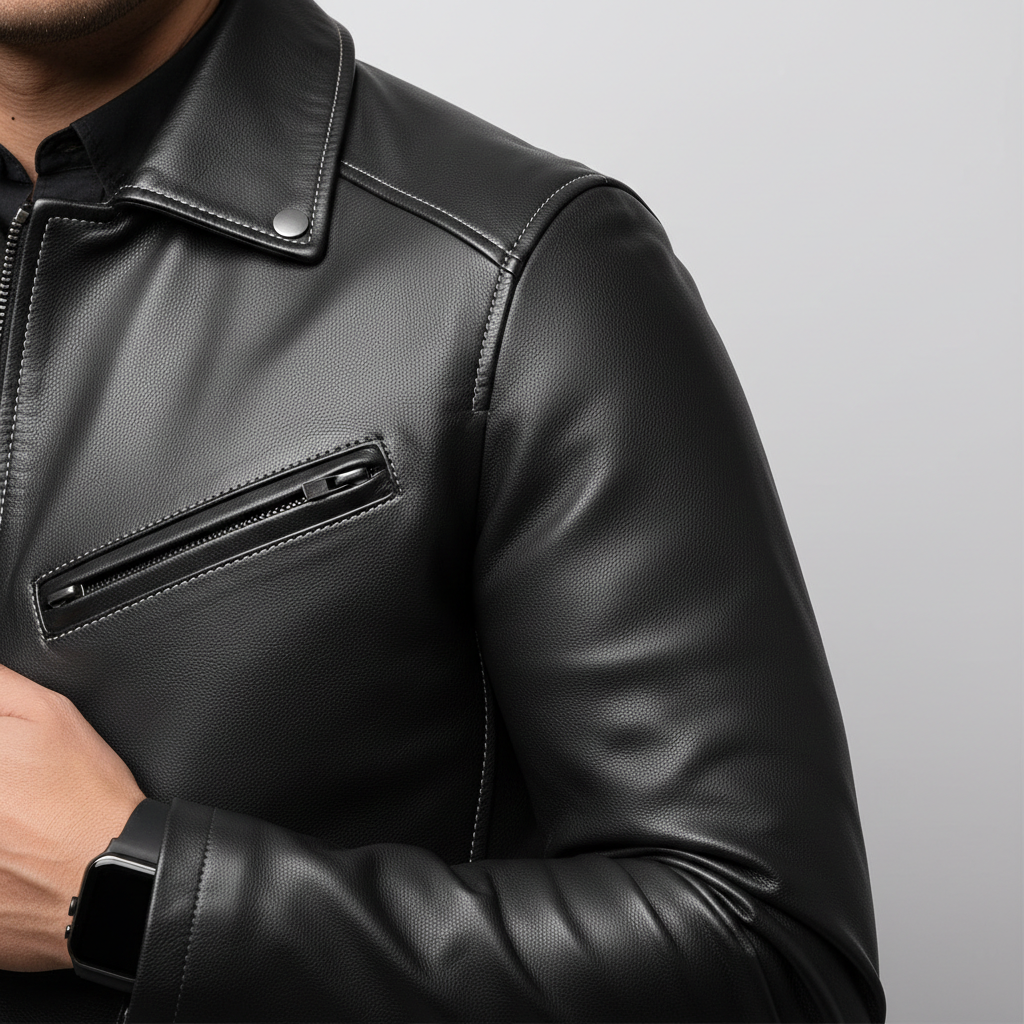
- Stitching: look for even stitch length, no loose threads, reinforced seams at shoulders and pockets.
- Zippers and snaps: smooth pull, no wobble, hardware should feel weighty, not tinny.
- Lining: should feel substantial, and ideally attached cleanly so it does not twist inside sleeves.
- Panels: excessive tiny panels can signal cost cutting, though some designs use paneling intentionally.
- Finish consistency: ultra-uniform shine can mean heavy coating, which sometimes ages worse than a natural finish.
According to the Leather Working Group (LWG), responsible sourcing and processing standards vary across tanneries, so if sustainability matters to you, check whether a brand references audited supply chains rather than vague claims.
Fit and sizing: the part that makes or breaks “best”
Most returns happen because of fit, especially shoulders and sleeve length. This matters more than the name on the tag.
What to check in 60 seconds
- Shoulders: seam lands near your shoulder bone, not down your arm.
- Chest: you can zip it without pulling across the chest, but it still looks shaped.
- Sleeves: end around the wrist bone, a little shorter is usually better than too long.
- Length: racers and motos often end around belt line, truckers can sit slightly lower.
- Mobility: reach forward and pretend to grab a steering wheel, if it binds hard, reconsider.
Many jackets relax a bit with wear, but they do not magically gain two inches in the shoulders. If shoulder fit is wrong, move on.
2026 buying guide: what to expect by budget
Prices swing wildly, and “best” at $250 is a different conversation than “best” at $1,200. Use ranges as a sanity check, then judge the piece in front of you.
| Budget range (USD) | What you can reasonably expect | Watch-outs |
|---|---|---|
| $150–$300 | Decent entry options, often corrected leather or mixed quality, basic hardware | Thin leather feel, weak lining, vague leather descriptions |
| $300–$700 | Better materials, more consistent construction, good daily-wear potential | Overpriced “designer” markup without better leather |
| $700–$1,500+ | Higher-grade hides, stronger hardware, better patterning, long-term wear | Fit still matters, heavy jackets can be impractical in warm states |
If you are shopping online, prioritize clear hide type, clear return policy, and detailed photos of seams and hardware. Those three signals beat hype.
Care and longevity: keep it looking good without overdoing it
Leather is durable, but it is not bulletproof. Many jackets get “ruined” by good intentions, too much conditioner, wrong cleaners, or heat drying.
- Routine: wipe dust with a soft cloth, spot clean gently, let it air out after wear.
- Conditioning: do it occasionally, not weekly, and test in a hidden spot first.
- Water exposure: light rain is often fine, but avoid soaking, never use direct heat to dry.
- Storage: wide hanger, avoid cramped closets, keep away from direct sun for long periods.
According to the American Leather Chemists Association (ALCA), leather care products and cleaning methods should match the finish type, and when in doubt, a professional leather cleaner is a safer call than experimenting.
Common mistakes when shopping for the best leather jackets for men
- Buying for the fantasy life: a heavy moto jacket looks great, but if you live in a warm city, it may sit unused.
- Ignoring sleeve length: too-long sleeves make even expensive jackets look sloppy.
- Overvaluing “genuine leather” labels: it is a broad term, judge leather feel, finish, and construction instead.
- Going too tight hoping it breaks in: minor snugness can relax, but tight shoulders rarely turn comfortable.
- Skipping return policy checks: leather fit is personal, easy returns reduce regret.
Conclusion: a smart way to pick your 2026 jacket
The best pick is the one that fits your shoulders, works with what you already wear, and uses leather and hardware that can take real life. If you want one jacket to cover most situations, a dark cafe racer or clean bomber usually stays in rotation.
Do two things next: choose your style based on your weekly outfits, then shortlist options by leather type and return policy, after that, focus hard on fit. That simple sequence usually gets you to the right buy faster.
If you need a more confident decision, bring two finalists into the same room, wear your usual jeans and shoes, take quick photos front and side, and pick the one that looks natural, not “try-hard.”
FAQ
- What is the best leather jacket style for a first-time buyer?
For many guys, a cafe racer in black or dark brown is the easiest start because it has minimal hardware and pairs with most casual outfits. - How can I tell if a leather jacket is good quality online?
Look for clear hide type, close-up photos of stitching and hardware, lining details, and a solid return window, vague descriptions plus no detail shots is usually a bad sign. - Is lambskin a bad choice for everyday wear?
Not necessarily, it is comfortable and looks sharp, but it can show wear sooner if you are hard on your outerwear or commute in crowded spaces. - Should a leather jacket fit tight or relaxed?
It should feel snug but not restrictive, especially across shoulders and upper back, if you cannot move comfortably, sizing up or changing the cut tends to work better than “waiting for break-in.” - How long does it take to break in a leather jacket?
It varies by hide thickness and finish, some feel good in a week or two of regular wear, heavier cowhide can take longer, but painful binding usually signals wrong fit. - Can I wear a leather jacket in the rain?
Light rain is often okay, but heavy soaking can cause spotting or stiffness, let it air dry naturally and consider a professional cleaner if stains set in. - What color leather jacket is most versatile for men?
Black and dark brown tend to be easiest, black reads sharper and more modern, dark brown feels more casual and pairs well with denim and earth tones.
If you are shopping for the best leather jackets for men and want a shorter shortlist, it often helps to filter by your climate, preferred style, and how much maintenance you are willing to do, once those three are clear, the “right” jacket shows up fast.