
Best jeans for curvy women usually come down to two things most shoppers don’t get to control in the fitting room: the waist-to-hip ratio a brand patterns for, and how the denim behaves after a few hours of wear.
If you’re tired of the same loop, snug thighs but gaping waist, or “fits today, slides tomorrow,” you’re not being picky, you’re reacting to real design tradeoffs. Curvy bodies tend to need more room through hip and thigh without adding inches at the waistband, and not every “curvy” label actually solves that.
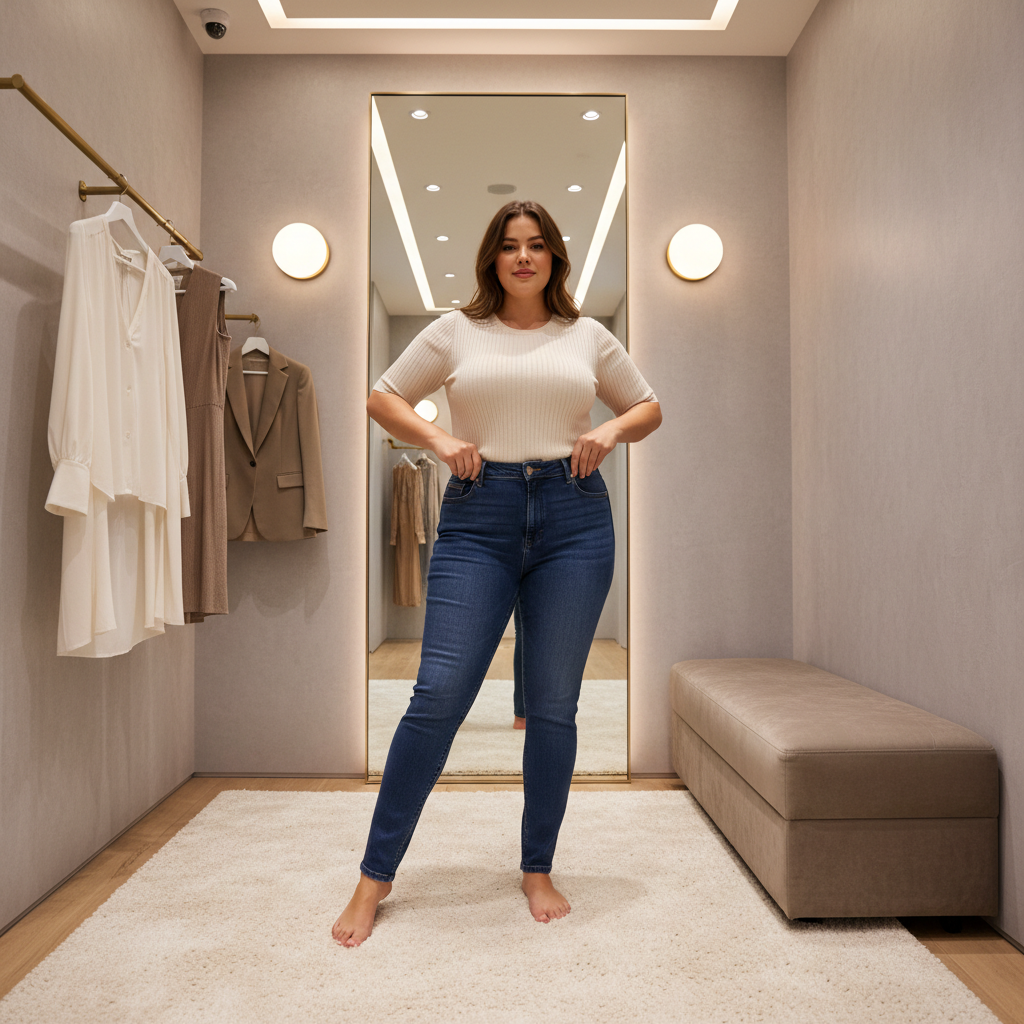
This guide focuses on what actually changes fit: rise, cut, fabric blend, and construction details like contoured waistbands. You’ll also get a quick self-check, a practical try-on routine, and a 2026-style shortlist of what to shop for by goal, not hype.
What “curvy” really means in denim (and why the waist gap happens)
In jeans, “curvy” usually points to a pattern with more hip and thigh room relative to the waist, sometimes paired with a contoured waistband. It’s not a body type judgment, it’s pattern math, and brands vary a lot in how they interpret it.
The waist gap often shows up when the waistband is drafted too straight for your shape. Even if the hip fits, the top edge can float because the curve from waist to hip is steeper than the jean expects.
- High hip vs. low hip differences: some people carry curve higher (upper hip), others more through seat and upper thigh, one “curvy fit” won’t suit everyone.
- Rise mismatch: a rise that’s too low can pull fabric down, causing gaping at the back; too high can dig at the waist even if hips fit.
- Stretch rebound issues: very soft stretch denim can relax fast, so it feels great at minute 5 and sloppy by lunch.
According to the FTC, clothing fiber labels must list fiber content, which is more useful than a marketing tag when you’re predicting stretch and recovery.
2026 jean trends that matter for curvy fit (not just style)
Trends only help if they solve a fit problem. For 2026, a few common direction shifts can be surprisingly practical for curves.
- Higher rises with shaped waistbands: more brands lean into contoured top blocks, which can reduce back-waist gaping in many cases.
- Baggy and relaxed legs: great if thigh snugness is your main issue, but you’ll still want a secure waistband so the jean doesn’t drift.
- Wide-leg and trouser denim: often cut with more hip ease and a straighter fall, which can feel smoother over seat and upper thigh.
- Less “super-skinny” stretch: firmer denim with a bit of elastane tends to hold shape longer, helpful if you get knee bagging.
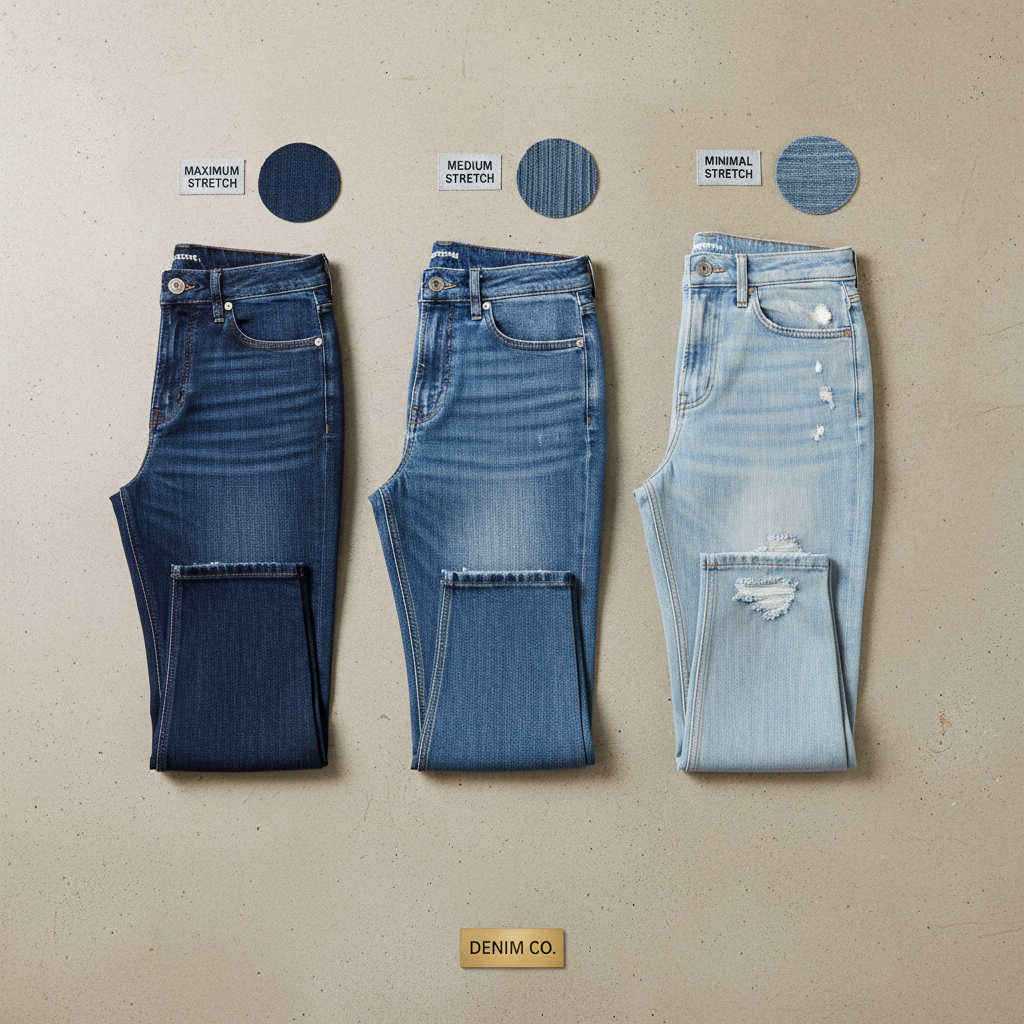
One small 2026 reality check: “curvy” capsules are expanding, but sizing consistency still varies by wash and fabrication, even within the same brand. Treat each wash like its own product.
Quick self-check: which curvy jean problem are you actually solving?
Before you shop, decide what “bad fit” means for you, because the fix changes the cut you should prioritize.
- If the waist gaps but hips fit: look for contoured waistbands, higher rise, and less stretch at the waistband.
- If thighs feel tight but waist is fine: try curvy straight, relaxed, boyfriend, or wide-leg; prioritize thigh circumference over size number.
- If the seat pulls or pocket lines strain: you likely need more back-rise and seat depth, not just more stretch.
- If jeans slide down during the day: avoid overly soft “buttery” denim; seek better recovery fabric and a snug waistband at purchase.
- If the waistband digs when you sit: you may need a different rise, or a waistband with a bit of stretch while keeping the leg fabric more stable.
Key point: size up is not always the answer, it often trades one problem for another, especially when the waistband becomes too large.
Best jeans for curvy women: what to shop for (by style goal)
Instead of brand names that may change season to season, here’s a practical “spec list” you can use online or in-store. This is how experienced denim shoppers narrow fast.
1) If you want a smooth waist with fewer gaps
- Rise: mid-high to high (often the easiest to anchor)
- Waistband: contoured or “no-gap” waistband, sometimes labeled as curved waistband
- Fabric: mostly cotton with 1–2% elastane, avoid ultra-high stretch if it relaxes on you
2) If you want comfort through hip and thigh
- Cut: curvy straight, slim straight, relaxed straight, or wide-leg
- Details: a bit more room at upper thigh, not just a wider hem
- Stretch: moderate stretch can help, but structure matters for shape retention
3) If you want a “snatched” look without the squeeze
- Front: flatter front pockets, minimal whiskering if you don’t want extra visual width
- Back: higher back rise and well-placed pockets can lift visually
- Fabric: denim with good recovery so it doesn’t bag at knees or seat
Denim fabric cheat sheet (and why fiber content beats marketing)
Fabric talk can feel nerdy, but it’s where the “wear for 30 minutes and regret” problem usually starts. The goal is stretch where you need it, and stability where you don’t.
| Fabric / Feature | How it tends to feel | Good for many curvy shoppers when… |
|---|---|---|
| 100% cotton denim | Structured, can feel stiff at first | You want shape, less slide-down, and don’t mind break-in |
| 98–99% cotton + 1–2% elastane | Comfort stretch, decent hold | You want waist comfort but still need the jean to stay put |
| Higher-stretch blends (more elastane/other stretch fibers) | Very soft, easy to pull on | You prioritize comfort, but must watch for sagging during the day |
| “Rigid-feel” stretch (firm hand + a little give) | Structured with a touch of flex | You want a vintage look but still need sitting comfort |
According to the FTC, the fiber content you see on labels is regulated, so it’s a reliable starting point even when brand fit terms get vague.
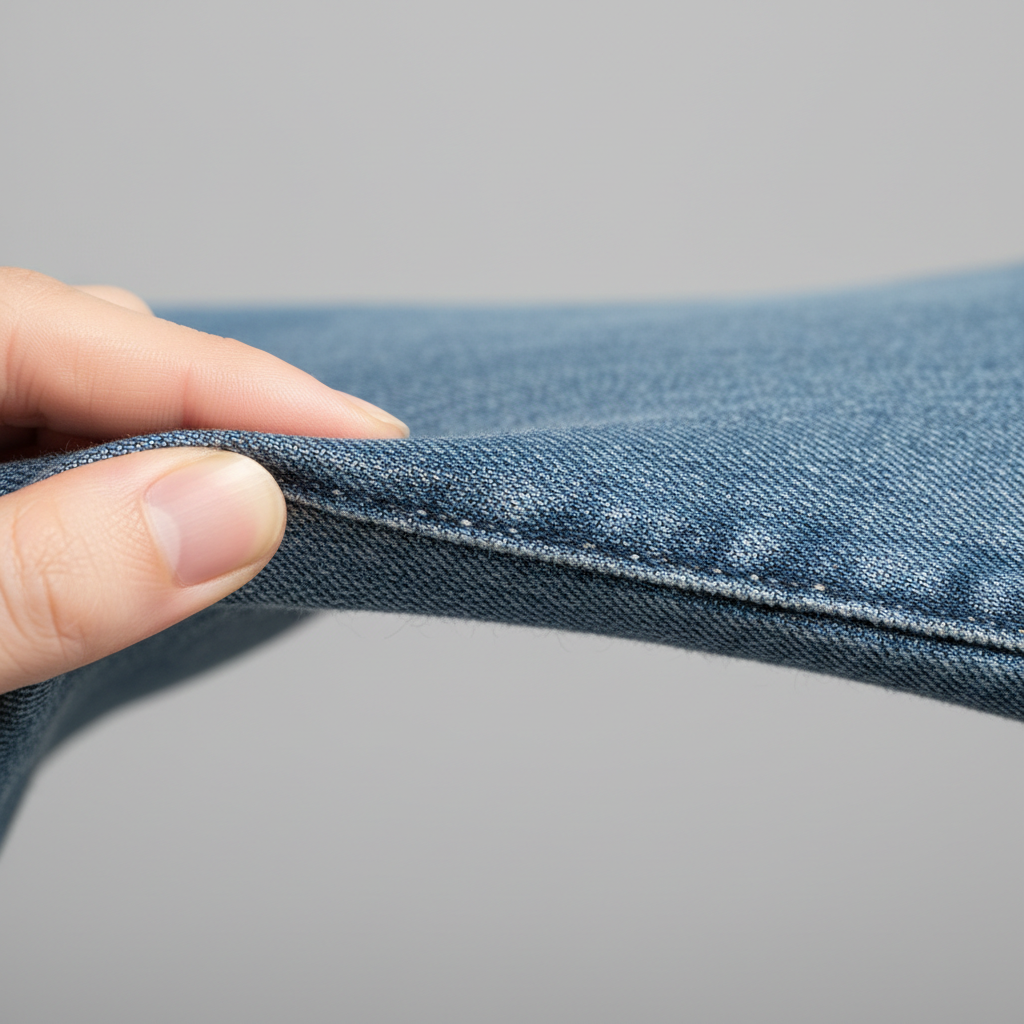
If you’re sensitive to pressure around the midsection, consider that comfort can also come from a better rise and waistband shape, not only more stretch. More stretch sometimes creates more rolling or slipping.
A realistic try-on routine that saves time (in-store or at home)
Here’s the routine that tends to catch the “looks fine, fails later” jeans before you commit. Give each pair a few minutes, not just a mirror glance.
- Start with waistband truth: button it, then sit and stand once. If it pinches sharply, don’t assume it will “loosen nicely.”
- Do the pocket check: if front pockets flare or pull open, the hip area may be under tension even if you can button the waist.
- Walk test: take 20–30 steps. If you feel the jean drifting down, the waistband may be too straight or the fabric too relaxed.
- Back-waist gap test: slide two fingers at the back. If you can fit a whole hand, you’ll likely be tugging all day.
- Look at knee behavior: bend and straighten. Excess wrinkling and bagging early hints at weak recovery.
Quick rule: if the thighs feel great but the waist is loose, tailor-friendly fixes exist; if the seat and rise feel wrong, tailoring usually won’t save it.
Common mistakes that make curvy jean shopping harder
These are the traps that keep people stuck in the same cycle, even when they’re trying different brands.
- Buying for the number, not the fit zone: focus on waist fit and upper hip first, then adjust leg shape with cut choice.
- Assuming “curvy” equals “bigger”: many curvy fits simply reshape the top block, you might stay in a similar size.
- Ignoring rise measurements online: two “high-rise” jeans can differ a lot. Check the actual rise in inches when available.
- Over-trusting super-stretch for comfort: it can feel amazing and still slide, crease, or bag out fast, depending on fabric quality.
- Not considering footwear: wide-leg and straight cuts can look off if the inseam isn’t right for your most-worn shoes.
According to the Better Business Bureau (BBB), reading return policies carefully matters for online shopping; denim fit often needs a couple tries, and policies vary by retailer.
When tailoring or pro fit help is worth it
If you find a pair where hips and thighs feel right but the waistband gaps, a tailor can often take in the waist or adjust the back seam. That’s a common, practical fix, especially for higher-quality denim you plan to wear for years.
If you deal with skin sensitivity, circulation concerns, or discomfort that goes beyond normal tightness, it’s smart to prioritize comfort over trends and consider asking a medical professional for guidance on compression and pressure. Jeans shouldn’t leave deep marks or numbness.
Conclusion: how to actually choose in 2026 without overthinking
The best jeans for curvy women in 2026 usually aren’t the ones with the loudest “curvy” label, they’re the pair that matches your rise needs, has the right top-block shape, and uses denim that keeps its promise after a few hours.
If you want one simple next step, pick two cuts to test, like a curvy straight and a wide-leg, then run the same 5-minute try-on routine on both. You’ll learn more from that comparison than from scrolling another dozen product pages.