
women stud earrings minimalist styles are the easiest “put-together” shortcut—until they poke, tarnish, irritate your ears, or look smaller than you expected once they arrive.
If you wear studs most days, the real goal is simple: a pair that feels like nothing, matches almost everything, and still looks intentional on Zoom, at work, or in jeans and a tee.
This guide focuses on the practical stuff people usually learn the hard way: sizing that reads well on the ear, metals that behave with sensitive skin, backs that stay put, and how to build a tiny rotation so you stop buying random pairs you never reach for.
What “minimalist” actually means for daily stud earrings
Minimalist does not have to mean “tiny” or “boring.” In earrings, it usually means clean shapes, low visual noise, and finishes that play well with your other jewelry.
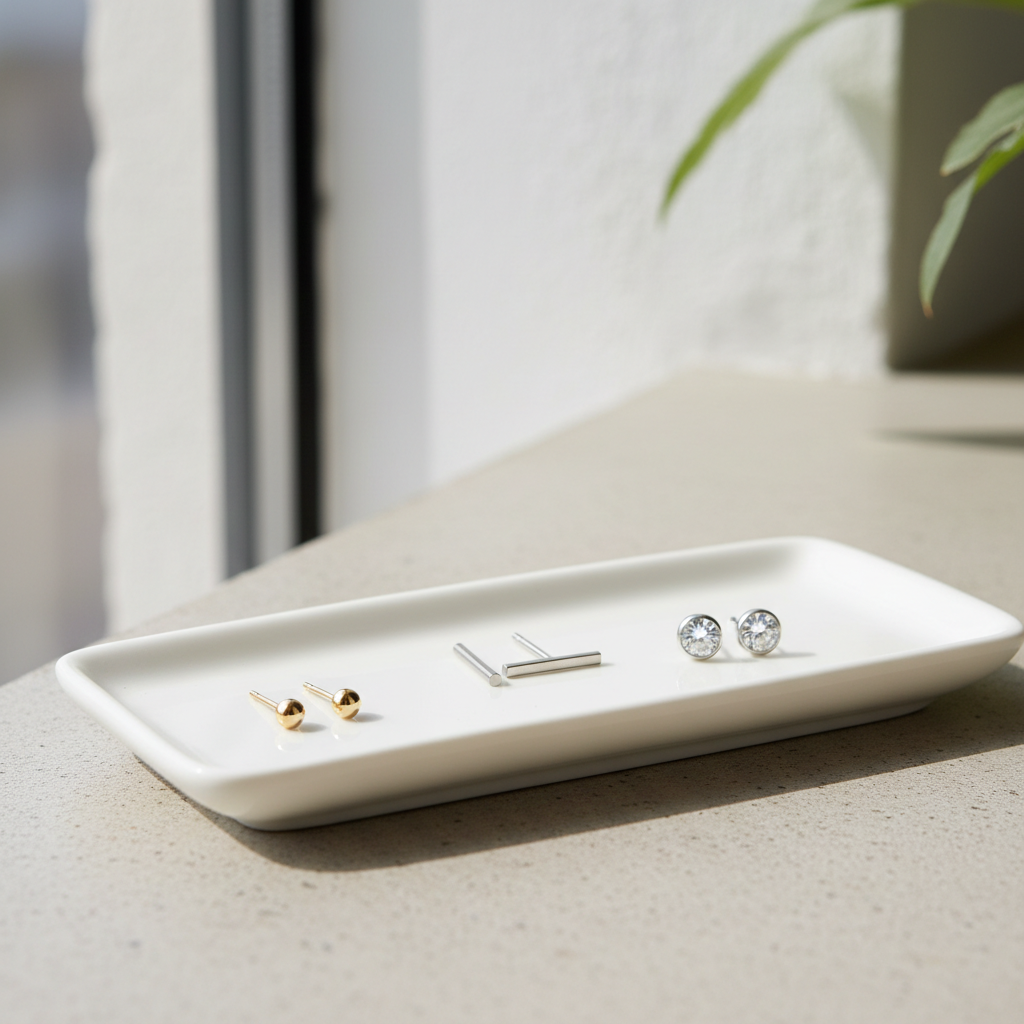
For everyday wear, minimalist studs tend to fall into a few “safe” families: small balls, tiny hoops that sit like studs, flat discs, short bars, and petite bezel-set stones. They look calm, but still catch light.
One more nuance: minimalist is often about proportion. A 3mm stud can disappear on some ears, while a 5–6mm stud still looks minimal yet readable from conversational distance.
Why your studs might not work day-to-day (common deal-breakers)
Most “daily studs” failures come from comfort and maintenance, not style. If a pair lives in your jewelry box, there is usually a reason.
- Post length is wrong: too long causes poking, too short feels tight and can trap moisture.
- Backs loosen: friction backs can slowly slide off, especially with fine hair or scarves.
- Metal reacts: itching, redness, or dryness can happen with nickel exposure or plating wear.
- Finish is high-maintenance: mirror-polished pieces show scratches and smudges faster.
- Stone settings snag: prongs catch on sweaters, towels, and hair.
According to the American Academy of Dermatology Association, nickel allergy is a common cause of allergic contact dermatitis, which is why metal choice matters if your ears get irritated easily.
Quick self-check: which minimalist stud style fits your routine?
Before shopping, it helps to be honest about how you actually live. These quick prompts usually narrow the field fast.
- If you sleep in earrings, look for flat-back or low-profile studs that won’t press into the skin.
- If you wear headphones all day, prioritize smaller, flatter fronts (disc, ball, bezel).
- If you lose backs often, consider screw backs or higher-grip backs (with the trade-off of slower on/off).
- If your ears feel “angry” after a few hours, consider implant-grade titanium or higher-karat gold, and avoid mystery alloys.
- If you want one pair for everything, choose a neutral finish (yellow gold, white gold, or polished silver tone) and a shape that mirrors your other jewelry.
And yes, aesthetics still count: if you love a slightly “cool” look, bars or tiny geometric shapes do that better than classic round stones.
Materials that usually hold up for everyday wear (and what to watch)
People often over-focus on “gold vs. silver,” but daily comfort depends more on what touches your skin and how the surface holds up to water, sweat, and products.
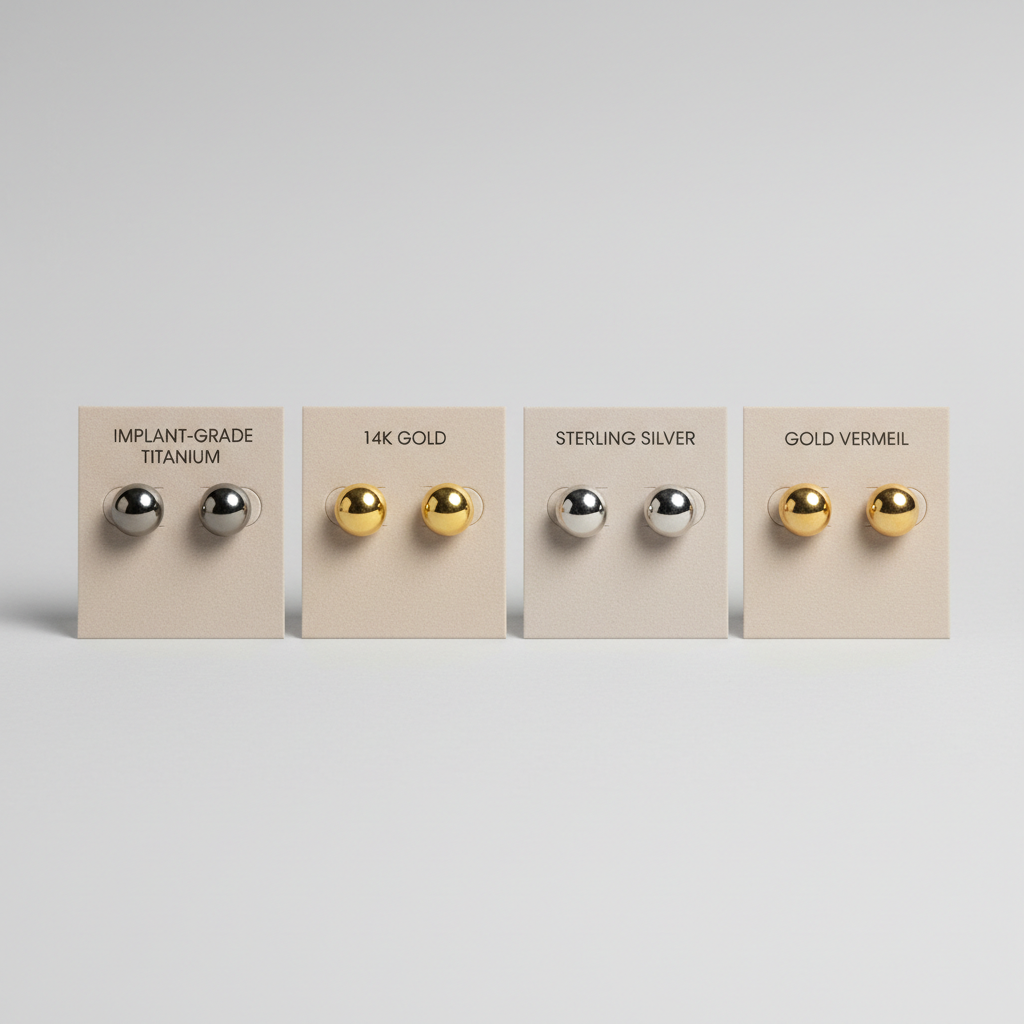
Here’s a practical comparison you can keep in mind when shopping for women stud earrings minimalist enough for daily wear.
| Material | Why people choose it | Typical watch-outs |
|---|---|---|
| Implant-grade titanium | Often well-tolerated for sensitive ears, light weight | Limited warm-gold look unless coated; verify grade if sensitivity is a concern |
| 14k gold (solid) | Good balance of durability and “fine jewelry” feel | Alloy mix varies; very sensitive wearers may still react |
| 18k gold (solid) | Richer color, higher gold content | Softer than 14k, can show wear sooner |
| Sterling silver | Bright look, accessible price | Tarnish is common; needs occasional polishing, especially in humid areas |
| Gold vermeil / gold-plated | Gold look for less, trendy styles | Plating wear over time; avoid water/chemicals if you want it to last |
| Stainless steel | Durable, low maintenance | Alloy varies; if you have known metal allergies, confirm composition |
If you deal with repeated irritation, it can be worth checking in with a dermatologist or a professional piercer. Skin reactions are personal, and guessing can get expensive.
Fit and sizing that looks minimal but not invisible
Size is where “minimalist” shopping goes sideways, because product photos rarely show scale on a real ear.
- 2–3mm: very subtle, often reads like a tiny dot, great for second/third piercings.
- 4–5mm: classic daily range, still minimal, more visible in video calls.
- 6mm+: can still be minimal depending on shape, but starts to feel more like a statement stud.
Post length matters too. Many everyday studs are around 6–8mm, but thicker lobes or swelling-prone ears may prefer a bit more room. If you sleep in earrings, too much extra length becomes the enemy.
Back style is the other half of “fit.” Friction backs are quick; flat-backs are comfortable; screw backs are secure but slower. None is perfect for everyone, so match it to your routine.
How to build a tiny minimalist stud rotation (so you stop impulse-buying)
If you want a daily look without thinking, a small “capsule” works better than one mythical perfect pair.
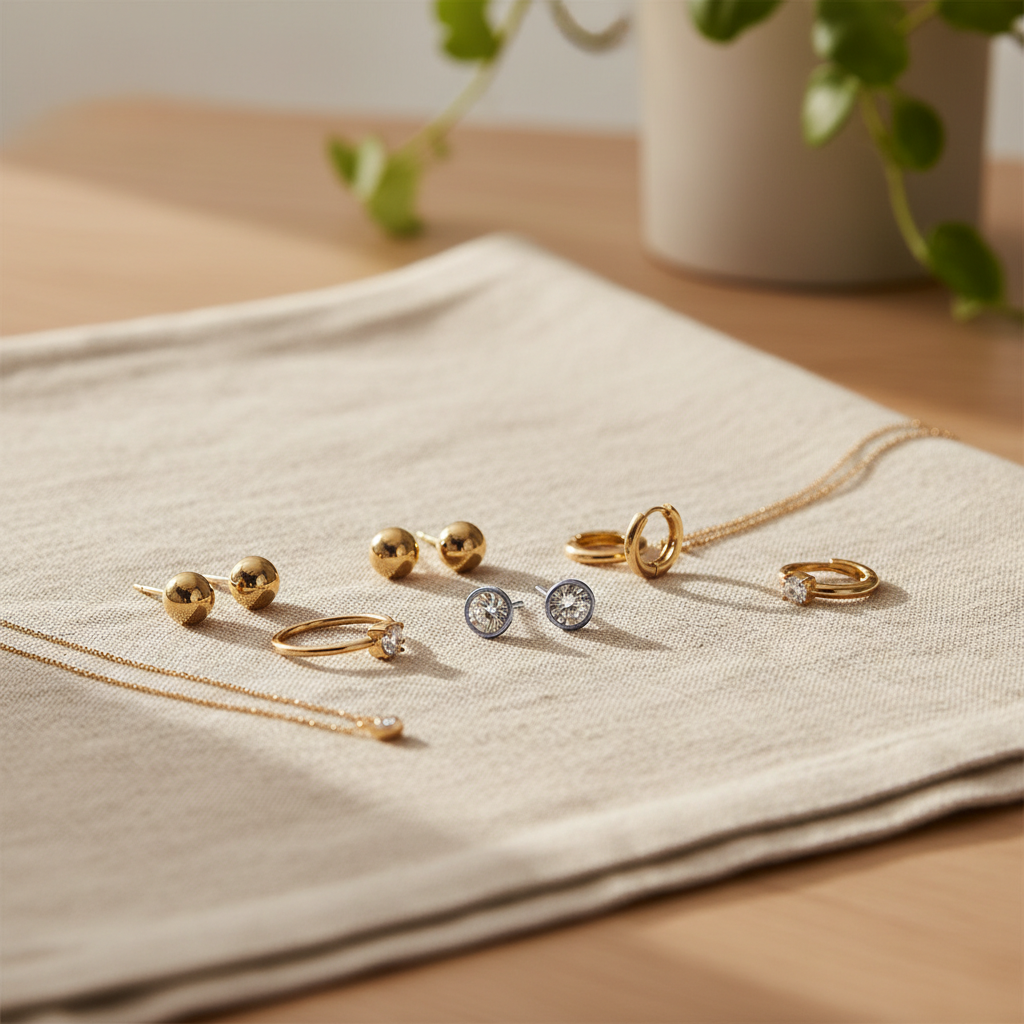
Here’s a simple three-pair setup that covers most outfits and moods while staying minimalist.
- Pair 1 (workhorse): 4–5mm ball, disc, or bezel stone in your main metal.
- Pair 2 (texture): tiny twist, matte finish, or subtle geometric for days you want edge without noise.
- Pair 3 (dress-up): slightly brighter stone or a tiny cluster that still sits close to the ear.
If you have multiple piercings, keep the “top” or second-hole studs smaller. The whole ear looks more intentional when sizes taper.
Care tips that make daily studs last longer (without babying them)
Minimalist studs are small, so buildup shows fast: lotion, sunscreen, hair products, even shampoo residue. A little care keeps shine and helps reduce irritation.
- Put earrings on after perfume, hair spray, and sunscreen when possible.
- Wipe posts and backs with a soft cloth weekly, especially if you wear them nonstop.
- If you notice discomfort, take a break and clean the area gently; if symptoms persist, consider professional advice.
- For plated pieces, minimize water exposure to slow wear.
According to the U.S. Food & Drug Administration (FDA), if you suspect an infection or complications related to a piercing, it’s wise to seek medical guidance rather than trying to treat it solely at home.
Buying checklist: what to read before you click “add to cart”
This is the unglamorous part, but it prevents most disappointment with women stud earrings minimalist picks.
- Front size in mm (not just “small”): look for 4–6mm if you want visible daily minimalism.
- Post gauge: many standard lobes are 20g or 18g, but your piercing may differ.
- Post length: important for comfort, especially with flat backs.
- Material clarity: “hypoallergenic” is vague; specific metals are easier to evaluate.
- Back type: friction, flat-back, or screw back, pick what you’ll actually wear.
- Return policy: earrings are often final sale for hygiene reasons, so check before purchasing.
Key takeaways: prioritize comfort and metal first, then size, then style. The “prettiest” stud is not the best daily stud if it irritates your ears or falls off in week two.
Conclusion: keep it minimal, but make it work for your life
Minimalist studs earn their keep when they disappear on your ear in a good way: no poking, no drama, no outfit math, just a clean finish that feels like you.
If you only do two things this week, do this: pick your ideal daily size range in millimeters, and decide which back style fits your routine. That combo narrows your options quickly and makes shopping way less random.
If you want a simpler closet-to-jewelry match, start with one reliable pair in a skin-friendly metal, then add a second pair with a different texture or shape for variety without clutter.
FAQ
- What size stud earrings look minimalist but still noticeable?
Many people land on 4–5mm for a daily minimalist look. Smaller can read ultra-subtle, larger can still be minimal if the shape stays clean. - Are flat-back studs better for everyday wear?
They can be, especially if you sleep in earrings or wear headphones. The trade-off is you may need more time to put them on and check sizing carefully. - Which metals are usually safer for sensitive ears?
Implant-grade titanium and solid gold often work well for many people, but sensitivities vary. If you have known allergies, confirm the exact material and consider professional guidance. - Do minimalist stud earrings go with both gold and silver jewelry?
They can, but mixing looks cleaner when the shapes are simple. If you dislike mixing metals, choose the tone you wear most and stick to it for the “everyday pair.” - How do I stop losing earring backs?
Consider higher-grip backs, flat-backs, or screw backs. Also check that the post thickness matches your backs, loose fit is a common reason they slip. - Can I shower with stud earrings?
With solid gold or titanium, many people do, but it can still lead to buildup and irritation over time. With plated pieces, water often shortens lifespan. - Why do my ears get irritated after wearing studs all day?
Common reasons include metal sensitivity, trapped moisture, friction, or residue from products. If irritation keeps returning, it’s smart to consult a dermatologist or professional piercer.
If you’re trying to find minimalist studs that truly work daily—comfortable backs, clear metal specs, and sizes that look right on the ear—building a small rotation on purpose is usually easier than chasing one “perfect” pair.