
Best dry shampoo for oily hair usually comes down to one thing, how well it absorbs oil at the roots without leaving a chalky cast or itchy buildup that makes you regret using it on day two.
If you have oily hair, you already know the annoying pattern, hair looks fine in the morning, then your crown and bangs start separating by lunch, and suddenly every mirror feels personal. Dry shampoo can help, but only when the formula matches your scalp and your hair color, and when you apply it like a product, not like a rescue spray.
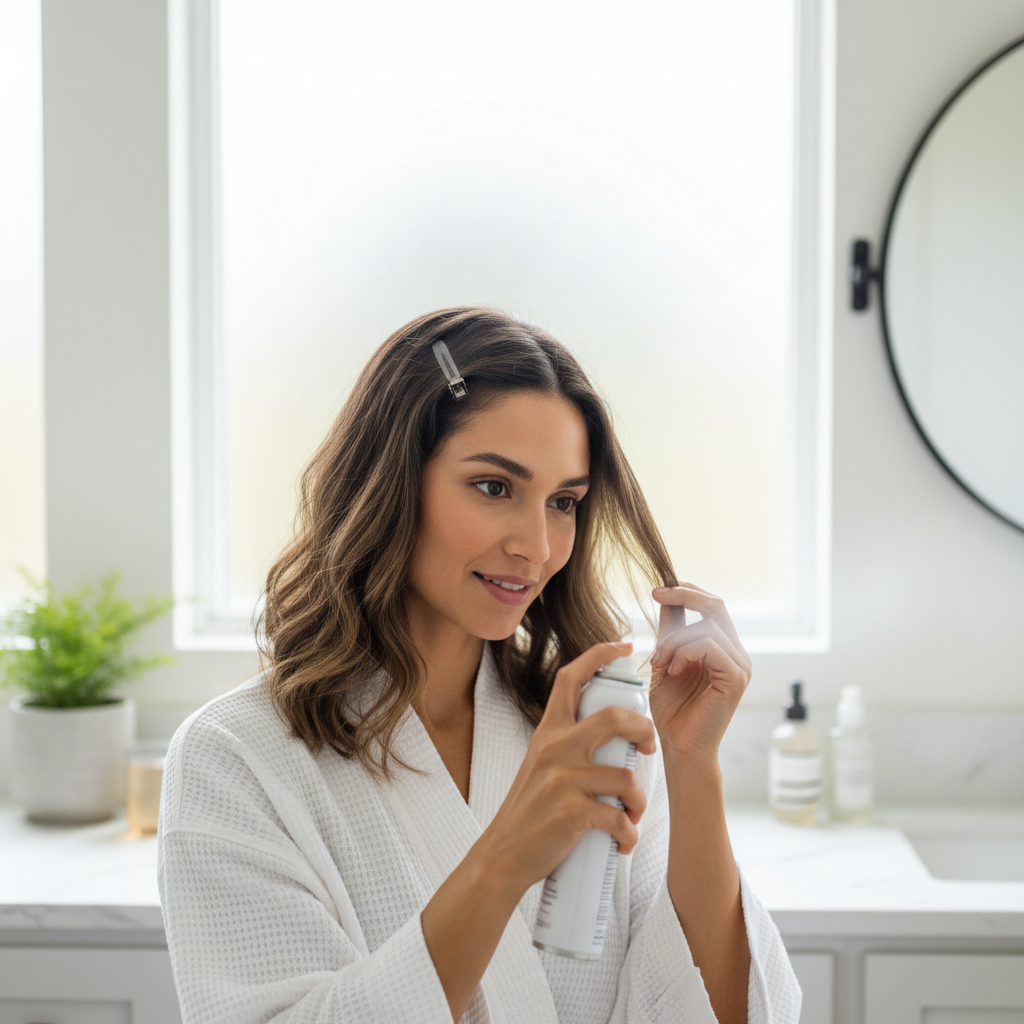
This guide focuses on what to buy and what to do in 2026, including a quick comparison table, a self-check to pick the right type, and a few reality checks that save you from sticky roots and gray dust.
What “best” really means for oily hair (not just “smells nice”)
For oily scalps, dry shampoo is basically a targeted oil-absorbent plus a texture booster. The best one for you tends to balance four things, and most disappointing picks fail at least one of them.
- Oil absorption at the root: Look for starches or clays that bind oil, common options include rice starch, tapioca starch, kaolin, or bentonite.
- Low visible residue: Especially important for dark hair, or if you apply often.
- Comfort: If your scalp gets itchy, you may need to avoid heavy fragrance or alcohol-forward formulas.
- Build-up control: Some products feel great once, then start coating the scalp after repeated use.
Key takeaway: the best dry shampoo for oily hair is the one you can use repeatedly without your scalp feeling “dirty in a different way.”
Quick comparison table: types of dry shampoo and who they suit
If you want a shortcut, start with format and finish. The “wrong” format is often why people think dry shampoo “doesn’t work.”
| Type | Best for | Pros | Watch-outs |
|---|---|---|---|
| Aerosol spray | Fast touch-ups, beginners | Even distribution, easy at crown | Can leave residue if over-sprayed |
| Non-aerosol pump | Sensitive scalps, scent-sensitive users | Often lighter fragrance, more control | Can concentrate powder in one spot |
| Loose powder | Very oily hair, targeted application | Strong oil absorption, cost-effective | Messy, higher risk of visible cast |
| Tinted dry shampoo | Brunette/black hair, beard edges, hairline | Less “gray” look, better blend | Can transfer to fingers, hats, pillowcases |
Why oily hair “breaks through” dry shampoo so fast
When dry shampoo seems to vanish in two hours, it’s usually not because your scalp is “too oily to fix,” it’s because one of these factors is in play.
- You’re spraying on top of oil, not before it peaks, dry shampoo performs better as prevention than emergency cleanup.
- Wrong distance and saturation, blasting too close creates wet powder clumps that sit on hair, not the scalp.
- Heat and sweat from workouts, hot commutes, or hats re-liquefy oil and push product around.
- Product layering (leave-in, serum, heavy conditioner) makes oil + silicone buildup feel greasy even when oil is reduced.
- Scalp irritation can increase oiliness for some people, and heavy fragrance or frequent re-application may worsen that cycle.
According to the American Academy of Dermatology (AAD), scalp conditions like seborrheic dermatitis can mimic “just oily hair,” so if you have persistent flakes, redness, or itch, it may be worth adjusting care rather than only adding more dry shampoo.
Self-check: choose your best dry shampoo for oily hair in 60 seconds
Answer honestly, because “what went viral” often fits a different scalp type than yours.
- If you get oily within 6–8 hours: consider a stronger absorbent (powder or oil-control aerosol), and plan on using it earlier in the day.
- If you have dark hair and hate residue: look for tinted options or ultra-fine translucent formulas, and apply in smaller bursts.
- If your scalp gets itchy easily: try fragrance-light products and avoid overuse, your “best” pick might be a non-aerosol pump.
- If your hair is fine and limp: pick a lightweight volumizing dry shampoo, heavy powders can make fine hair feel tacky.
- If you use a lot of styling cream/oil: choose a clarifying-friendly formula and plan regular washes, dry shampoo won’t dissolve heavy product layers.
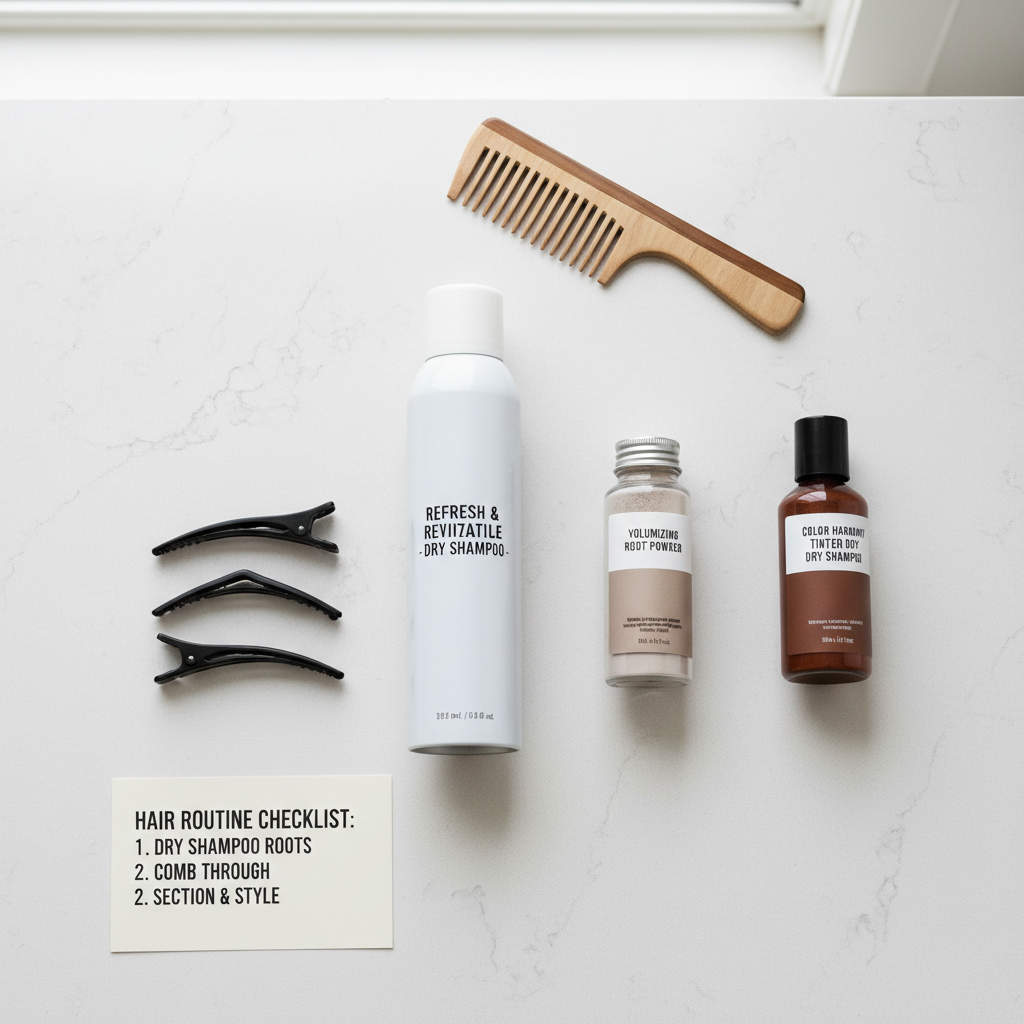
Quick rule: if your roots look cleaner but feel coated, switch formats or reduce frequency, if your roots still look shiny, you likely need earlier timing and better sectioning.
How to apply dry shampoo so it actually works (step-by-step)
This is the part most people rush, and it’s why they keep searching for the best dry shampoo for oily hair instead of getting results with what they already own.
For aerosol dry shampoo
- Start on dry hair, focus on the oiliest zones first, crown, part line, and bangs.
- Shake well, then hold the can 6–10 inches away.
- Lift hair in sections, spray short bursts at the roots, not a continuous stream.
- Wait 30–90 seconds, give absorbents time to bind oil.
- Massage with fingertips, then brush through or blow-dry on cool for a cleaner finish.
For powder or pump formats
- Apply a small amount along the part, then add more only where needed.
- Press product into roots with fingertips, then brush from scalp outward.
- If you see white cast, use a clean fluffy makeup brush to dust excess off the scalp line.
Pro tip that sounds boring but works: apply at night on clean-ish hair, it can absorb oil as it forms and often looks better in the morning than a frantic midday spray.
Practical routines for common oily-hair scenarios
One “routine” does not fit everyone, so here are a few setups that usually match real life.
- Office day, oily bangs by noon: light spray on bangs and hairline in the morning, then a tiny touch-up at 2–3 pm, don’t recoat the whole head.
- Gym after work: use dry shampoo before the workout for prevention, then after cooling down, add a minimal amount at the crown and blow-dry on cool.
- Dark hair, visible residue problems: switch to tinted or ultra-fine translucent, apply in micro-bursts, and brush longer than you think you need.
- Fine hair with flat roots: focus product at crown and sides, then lift roots with fingers while cool air sets texture.
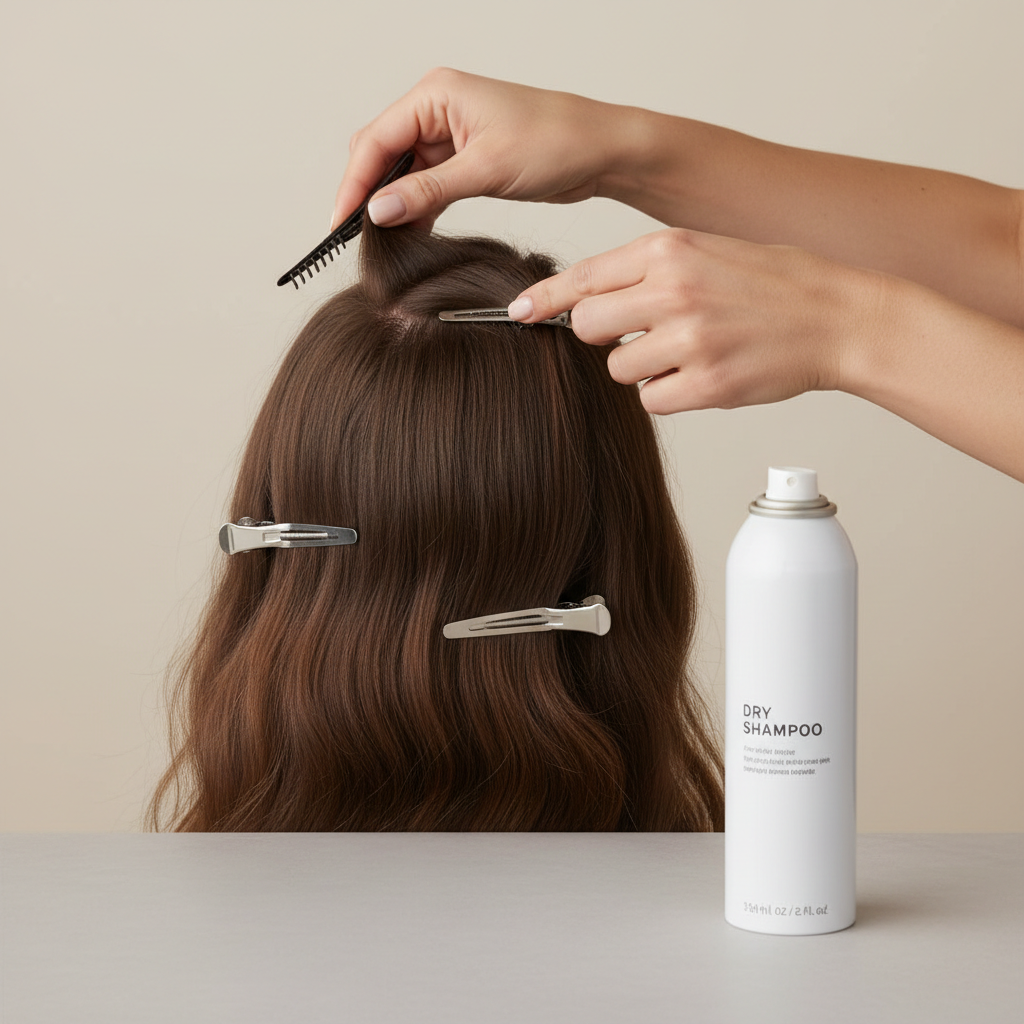
If you’re trying to stretch wash day, keep expectations realistic, dry shampoo helps appearance and texture, but it doesn’t truly clean the scalp, if your scalp feels heavy, a wash often beats another layer.
Mistakes that make oily hair look worse (and how to avoid them)
- Spraying too close: it creates concentrated patches that look dusty and feel sticky.
- Not letting it sit: immediate brushing can just move oil around.
- Using it daily without washing: many people can do occasional use fine, but long stretches can cause buildup, dullness, or itch for some scalps.
- Covering everything: you mainly need scalp zones, not the mid-lengths and ends.
- Masking scalp issues: if you have persistent flakes, soreness, or inflammation, dry shampoo may aggravate symptoms, and a dermatologist or stylist can help troubleshoot.
According to the U.S. Food and Drug Administration (FDA), aerosol products should be used as directed and away from heat or flame, so skip applying in a steamy bathroom right next to hot tools, and make sure ventilation is decent.
Conclusion: picking a winner for 2026 without overthinking it
The best dry shampoo for oily hair in 2026 is rarely the “most famous” one, it’s the formula and format that match your oil level, your hair color, and how often you rely on it. If you want the simplest path, choose an aerosol for easy distribution, then adjust to tinted or powder if residue or oil strength becomes your sticking point.
Action steps: test your timing by applying a small amount earlier than you normally would, and commit to proper sectioning for a week, if oil still breaks through fast, switch to a stronger absorbent format rather than spraying more of the same product.
FAQ
What is the best dry shampoo for oily hair that gets greasy the same day?
Look for stronger absorbents like starch + clay blends, and use it earlier, often mid-morning beats waiting until hair looks shiny. Same-day grease usually needs prevention plus better sectioning.
Is tinted dry shampoo better for oily hair or just for color?
Tint mainly helps with visible residue, but many tinted formulas also feel slightly grippier, which can help roots look less slick. If transfer bothers you, go light and brush well.
How often can I use dry shampoo if my hair is very oily?
Many people use it a few times per week, but tolerance varies, scalp comfort is the deciding factor. If itch, bumps, or heavy buildup shows up, scale back and consider washing more often or asking a dermatologist for advice.
Why does dry shampoo make my scalp itchy?
Common triggers include fragrance, alcohol, and product buildup sitting on the scalp. Switching to a lighter-scent formula, using less product, and washing sooner often helps, persistent irritation deserves professional input.
Can dry shampoo cause hair loss?
Dry shampoo itself is not typically framed as a direct cause, but heavy buildup and aggressive scratching can increase breakage for some people. If you notice shedding changes, it’s reasonable to pause use and consult a dermatologist.
What’s the best way to remove dry shampoo buildup?
A thorough wash with attention to the scalp, plus occasional clarifying shampoo if your hair tolerates it, usually works. If your hair is color-treated or dry on ends, focus clarifying on roots and condition lengths.
Should I use dry shampoo before or after I style my hair?
For oily hair, applying before styling often gives better lift and less shine. If you apply after styling, keep it targeted at roots and re-shape with cool air or a brush.
If you’re trying to stretch wash days without feeling grimy by mid-afternoon, it can help to treat dry shampoo as part of a routine, not an emergency fix, pick a format that matches your hair color and oil level, then apply with sections and timing that make it look natural instead of dusty.